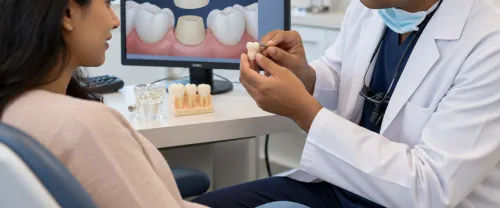

Tooth pain that returns is a reason to assess the cause, not simply wait for the next flare-up. You will be able to judge how quickly to book, recognise symptoms that need same-day care, prepare useful information, and understand what a dentist will check.
Key takeaways
- Book a dental appointment if tooth pain lasts more than two days.
- Record whether pain follows meals, temperature, biting, or lying down.
- Pain disappearing does not prove the tooth has healed.
- Seek urgent care for swelling, fever, trauma, or difficulty swallowing.
How Soon Should You Book an Appointment for Recurring Tooth Pain?
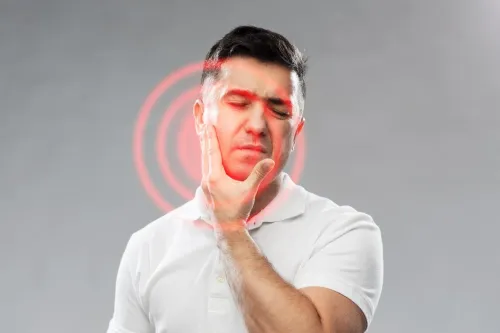
Book an appointment when recurring tooth pain lasts one or two days, returns over several days, follows meals, or is not controlled by ordinary label-directed pain relief. A toothache lasting more than two days needs assessment, even if the tooth looks normal.
Promptly ask when to see a dentist if pain wakes you repeatedly, starts without a trigger, lingers after hot or cold drinks, or worsens when you bite.
Recurring tooth pain can come from:
- Decay
- A failing filling or crown
- A crack
- Gum disease
- Pulp inflammation or infection
- Bite trauma
Arrange same-day dental care for tooth abscess warning signs, including facial swelling, gum swelling, fever, pus, a bad taste, swollen neck glands, difficulty opening your mouth, uncontrolled bleeding, or pain after an injury.
Difficulty breathing, swallowing, or speaking, or swelling near the eye or neck, requires emergency dental care through medical services rather than home treatment.
An abscess does not permanently resolve because the pain decreases. The pulp can deteriorate while infection spreads around the root. Drainage, root-canal treatment, or extraction treats the source; antibiotics mainly help when infection is spreading or causing systemic illness, and they do not replace dental treatment. Don’t wait for another flare-up to decide.
What Does the Pain Pattern Suggest About Its Cause?
The timing, trigger and location of pain suggest different possibilities, but only an examination can identify the cause.
| Pattern | What it may fit | What to do |
|---|---|---|
| Brief cold sensitivity or sweet sensitivity that stops quickly after removal | Exposed dentin or reversible irritation | Arrange care if it keeps recurring |
| Lingering thermal pain after hot or cold, spontaneous pain, or night waking | Deeper pulp inflammation | Book a prompt dental assessment |
| Sharp pain when biting, especially on release | Possible cracked tooth | Seek review before the crack extends |
| Upper back tooth pain with congestion, facial pressure, or several teeth involved | Possible sinus tooth pain | Ask a dentist to exclude a dental cause |
| Recurring wisdom tooth pain with gum swelling, bad taste, or limited opening | Possible pericoronitis around a wisdom tooth | Arrange assessment |
Short-term sensitivity after filling is not automatically a failed filling. Worsening spontaneous pain, lingering thermal pain, pain when biting, or swelling needs review.
Cracked tooth symptoms can be intermittent, and ordinary X-rays may not show the crack. Ignoring it can allow the crack to extend.
Jaw muscle pain or TMJ pain tends to cause tenderness in chewing muscles, pain with jaw movement, or a broad ache that is difficult to localise. That pattern does not rule out a tooth problem.
Do not assume sinus pain explains upper-tooth symptoms without dental assessment. A dentist can compare the painful tooth with nearby teeth, gum tissues and bite before deciding whether the source is dental, muscular, joint-related, or sinus-related.
Why Can Tooth Pain Disappear Even When the Problem Remains?
Tooth pain disappears when irritation settles, not necessarily when the tooth heals. A cavity, crack, gum problem, or damaged pulp can flare and settle while the underlying defect remains. In advanced disease, a dying tooth pulp can lose vitality, so pain fades before infection develops around the root.
Do not cancel an appointment because the tooth feels better, especially after spontaneous pain, night pain, swelling, or a previous injury. Symptom relief can hide a problem that still needs treatment.
Pain after dental trauma deserves prompt review even when the surface looks intact. A blow can injure or devitalize the pulp, fracture the root, or displace the tooth; colour, looseness, bite, or infection changes can appear later.
Bring a symptom log for toothache to the appointment. Record:
- The start and end time, duration of each episode, exact location, food or temperature triggers, and whether pain lingers.
- Chewing pain or pain on release, spontaneous pain, night waking, swelling, bad taste, and nasal symptoms.
- Recent dental work or trauma, plus every medication and painkillers used.
This record helps distinguish a one-off sensitivity episode from a recurring pattern that warrants examination. A quieter tooth is not necessarily a healthy tooth.
What Will the Dentist Check When the Pain Keeps Returning?
Even when the pain has stopped, a dental examination for tooth pain can reveal damage that symptoms hide. The dentist will ask when episodes start, what triggers them, how long they last, and whether trauma or recent treatment preceded them.
They will inspect the painful and neighbouring teeth for decay, cracks, worn or leaking restorations, gum inflammation, swelling, and trauma-related changes.
Testing may include:
- Percussion by tapping the tooth, bite testing, a cold test, heat test, and an electric pulp test
- Gum probing for isolated deep areas, plus checks for tooth mobility
- A dental X-ray when the cause is not visible during inspection
A normal-looking X-ray does not rule out early pulp inflammation or a crack. The diagnosis combines your symptom pattern with examination and test results. A targeted cracked tooth assessment may use a bite test, transillumination, gum probing, or additional imaging.
The painful tooth may not be the source. Referred tooth pain can come from another tooth, jaw muscles, the temporomandibular joint, the maxillary sinus, or less commonly a non-dental condition.
Tooth grinding can overload a tooth, and a night guard may reduce those symptoms. It cannot repair decay, an infected pulp, or a cracked tooth, so do not assume grinding is responsible without examination.
What Can You Do Before the Appointment, and Who Can Help You Decide Next Steps?
For what to do before a dentist appointment, tooth pain needs temporary care, not a home cure. Rinse with warm water, floss gently to remove trapped food, and avoid very hot or cold foods on the painful side.
- Use only pain relief medication that the product label permits. Adults who can safely take them may use ibuprofen alone or with acetaminophen/paracetamol according to the label and personal medical advice.
- Ask a pharmacist or clinician before taking medication if you are pregnant, take anticoagulants, have an allergy or complex medical condition, or are below the medicine’s age limits.
- Never put aspirin on gums, another tablet on the tooth, or any medicine directly against oral tissue. Aspirin on gums can cause a chemical burn.
- Do not cancel care because pain improves. A cavity, crack, inflamed pulp, gum problem, or infection can flare and settle.
| Decision | What to do | When it applies |
|---|---|---|
| Same-day dental care | Contact a dentist urgently | Swelling, fever, pus or bad taste, uncontrolled bleeding, difficulty opening the mouth, or pain after trauma |
| Prompt appointment | Arrange assessment soon | Pain returns, follows meals, lingers after temperature changes, or worsens on biting |
| Monitoring | Record symptoms and arrange review if they recur | A clearly brief sensitivity episode that stops immediately |
A pharmacist can help with medication cautions; a Bengaluru dentist recurring tooth pain assessment can connect your history with pulp and bite testing, gum findings, and imaging. Orchards Dental Care 9886020830 can provide that structured treatment discussion.
Related services
Dental Filling Restore Your Tooth with Advanced Dental Filling at Orchards Dental Care At Orchards Dental Care, Sadashiva Nagar, Bangalore, we provide high-quality... View service → |
Root Canal Treatment (RCT) Save Your Natural Tooth with Expert Root Canal Treatment at Orchards Dental Care At Orchards Dental Care, Sadashiva Nagar, Bangalore, we provide... View service → |
Frequently asked questions
How soon should you book an appointment for recurring tooth pain?
Book an appointment when pain lasts one or two days, returns over several days, follows meals, or is not controlled by ordinary label-directed pain relief. Toothache lasting more than two days needs assessment, even if the tooth looks normal.
What can a recurring tooth pain pattern suggest?
Pain after hot or cold foods, pain when biting, spontaneous throbbing, and pain that worsens when lying down can point to different causes. Record when the pain starts, how long it lasts, and what triggers it for the dentist.
Why can tooth pain disappear while the problem remains?
Pain can fade when inflammation changes or the tooth’s nerve loses vitality. The underlying decay, crack, infection, or damaged filling can remain and worsen without obvious symptoms.
What will a dentist check when tooth pain keeps returning?
The dentist will examine the tooth and gums, test sensitivity and biting, check nearby teeth, and review dental X-rays when needed. They will look for decay, cracks, loose fillings, infection, and gum problems.
What can you do before your dental appointment?
Record triggers and timing, keep the area clean, avoid foods that trigger pain, and use pain medicine only as directed on its label. Seek urgent care for facial swelling, fever, injury, or difficulty swallowing or breathing.
Related services
General Dentistry Comprehensive General Dentistry at Orchards Dental Care At Orchards Dental Care, Sadashiva Nagar, Bangalore, we provide complete General Dentistry... View service → |
Temporomandibular Joint Disorder (TMJ) Temporomandibular Joint Disorder (TMJ) Relieve Jaw Pain with Expert TMJ Treatment at Orchards Dental Care At Orchards Dental Care, Sadashiva Nagar, Bangalore, we provide comprehensive... View service → |