A beautiful result can still look artificial if the dentist chooses a veneer shade before checking gum health, tooth position, bite and facial proportions. By the end, you will know which examinations shape the plan, how you can test a proposed design, and why the most conservative option is not always a veneer.
Key takeaways
- Treat decay, gum disease and bite problems before cosmetic work.
- Use facial proportions, lip movement and photographs to set the target.
- Compare previews, materials and treatment limits before choosing an option.
- Plan maintenance before treatment to protect the final result.
Why health and bite come before cosmetic treatment
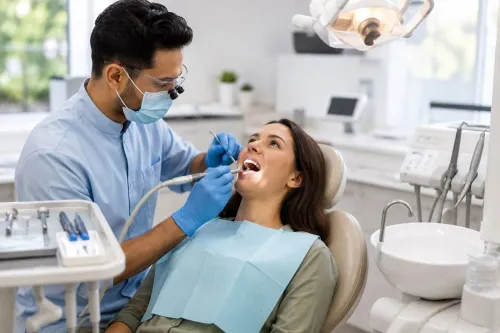
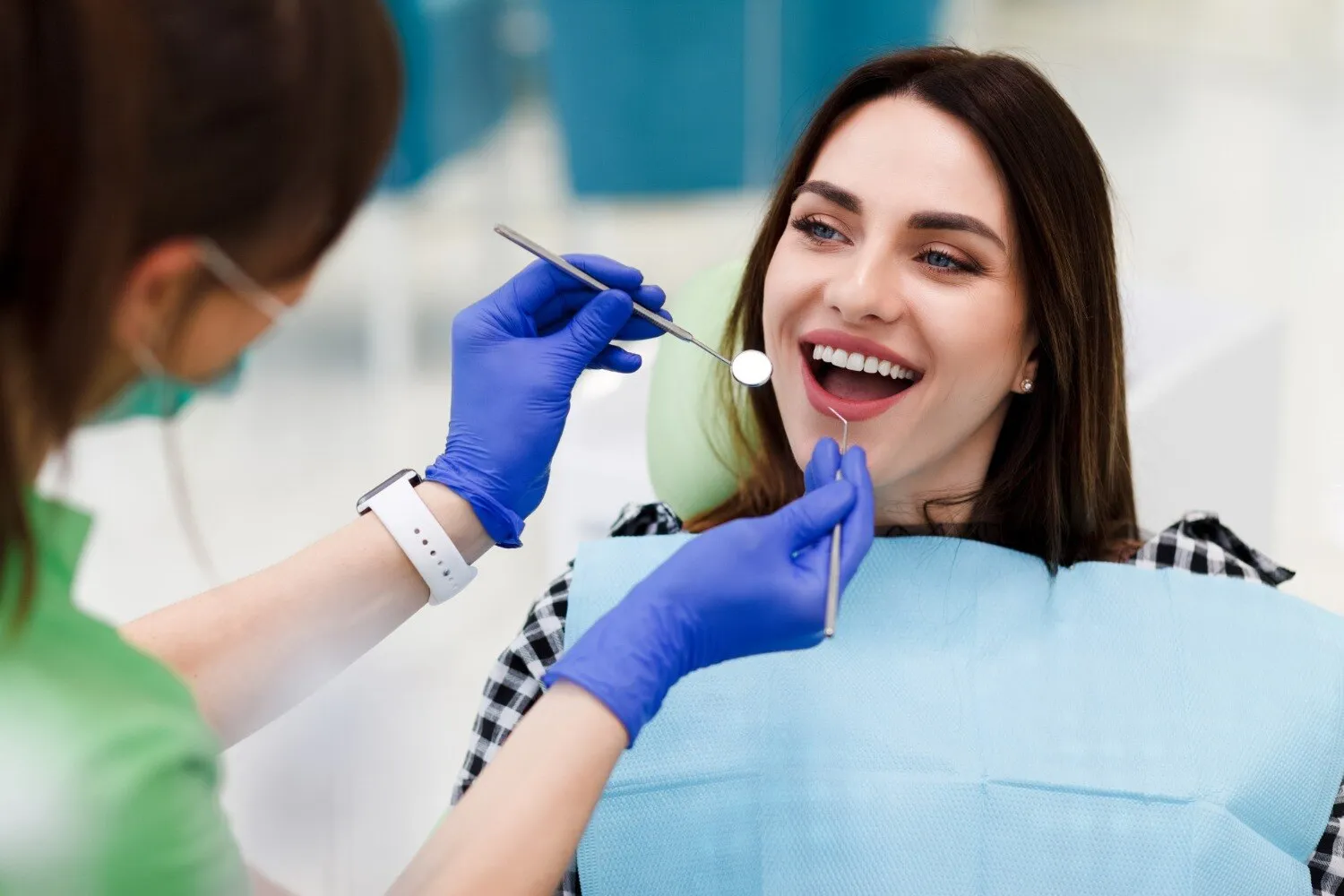
Cosmetic treatment starts with disease and function control, not a veneer shade. During the first cosmetic consultation, the dentist reviews your medical and dental history, concerns, medications and previous procedures, then records photographs and studies your face, lips and smile.
A tooth-by-tooth examination includes a decay and cracks examination, existing fillings or crowns, tooth wear, gum condition, sensitivity and signs of infection. X-rays and pulp tests are added when the clinical findings require them.
The dentist decides whether appearance changes must wait by checking:
1. Active cavities, cracked teeth, leaking restorations or infection. These need repair or root-canal treatment before veneers, bonding or crowns, because cosmetic work placed over unstable teeth can fail or hide worsening disease.
2. Gum inflammation, periodontal bone loss or poor plaque control. Treating the gums first creates a healthier margin; placing restorations into swollen tissue can cause bleeding, recession and persistent inflammation.
3. Severe tooth wear, clenching, grinding or an unstable bite. The plan may require bite adjustment, orthodontics, restorative space, a night guard or treatment of the grinding habit before final design.
Bite forces determine tooth length, contact points and material choice. If crowding or rotation causes the concern, orthodontics can preserve healthy enamel better than cutting teeth to disguise their position. Only after health and function are controlled should the dentist finalize cosmetic changes.
How the dentist sets a natural-looking target
The target is set from the face outward, not by making every tooth the same length, width or shade. Facial analysis records facial and dental midlines, facial proportions, lip position and how the lips move; smile analysis then relates those findings to tooth display at rest and smiling.
| Measurement | Why it matters | What an imbalance can show |
|---|---|---|
| Lip position and mobility | Sets how much tooth and gum will appear | A design that looks fine in a photograph but excessive during speech or smiling |
| Tooth display at rest and smiling | Establishes incisal-edge position and visible tooth length | Teeth that look too short, too long or hidden beneath the lip |
| Dental midline and facial midline | Tests whether the front teeth align naturally with the face | A straight smile that still appears shifted |
| Gingival levels and smile line | Balances tooth crowns against the gum frame | Uneven gum exposure or restorations extending too far into tissue |
| Tooth width, length and embrasures | Creates proportion without identical, block-like teeth | Overly square teeth and unnatural dark spaces |
| Speech sounds and lip support | Checks the planned position during phonetics | Lisping, altered “f” or “v” sounds, or lips that cannot close comfortably |
The dentist also evaluates incisal-edge anatomy, contact points, translucency, surface texture and subtle variation between teeth. A natural plan preserves small differences in shape and gloss while keeping the overall midline, gum levels and lip-tooth relationship balanced. Photographs and video during rest, smiling and speaking expose problems a single posed image misses.
How treatment options and digital previews are compared
The least invasive option that solves the actual problem usually comes first. The dentist compares tooth structure, decay or cracks, bite forces, colour, tooth position, longevity, repairability and your willingness to accept irreversible treatment.
| Option | Best fit | Main trade-off |
|---|---|---|
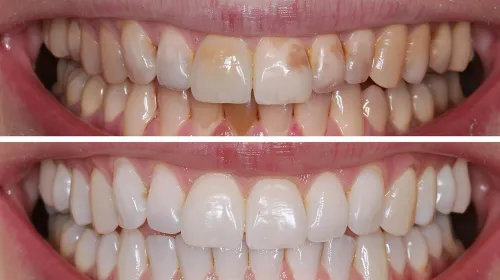
| Whitening | Generalised natural discolouration | Restorations do not bleach, so whiten before matching them |
| Composite bonding | Small chips, gaps or shape changes | Can stain or chip and needs maintenance |
| Enamel reshaping | Minor uneven edges or excess contour | Removes tooth structure, so it suits only limited corrections |
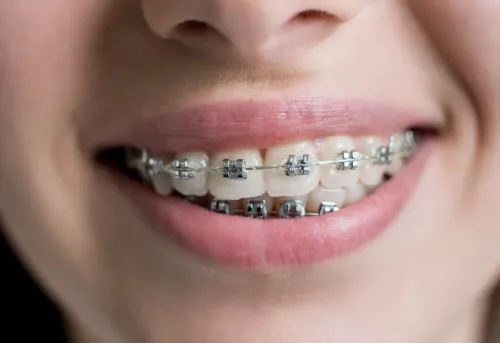
| Orthodontics | Crowding, rotations, spacing or an uneven midline | Takes longer but can preserve healthy enamel |
| Veneers | Front-surface colour or shape changes with suitable enamel | Irreversible; they can debond, chip, fracture or cause sensitivity |
| Crowns | A heavily damaged, worn or extensively restored tooth | Requires substantially more reduction than bonding or a veneer |
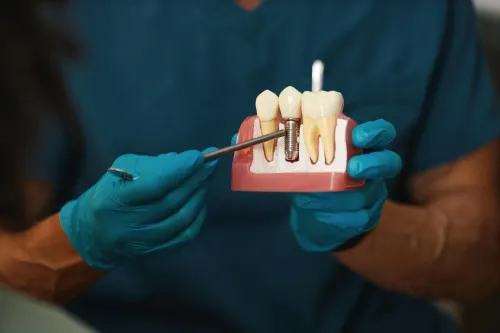
| Implants | A missing tooth after assessment of bone and gum tissue | Front teeth need soft-tissue and emergence-profile planning |
| No treatment | A healthy variation with no functional or meaningful cosmetic problem | Avoids cost, biological risk and maintenance |
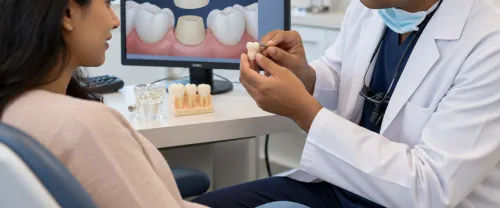
A digital smile design can show proposed proportions in photographs, but it is a planning aid, not a promise. A diagnostic wax-up transfers that plan to models; a temporary mock-up or trial smile lets you assess tooth length, speech, lip support and bulk before preparation.
Ask how the preview relates to the final material, and confirm whether whitening must be completed first and allowed to stabilise before the definitive shade is selected.
How shade, shape and material choices protect a natural result
Shade selection takes place before prolonged isolation, photography or tooth preparation. Tooth dehydration makes enamel look temporarily lighter; matching a restoration at that point can create a mismatch after rehydration. If whitening is planned, it usually comes before bonding or veneers, followed by a stabilization period chosen for the clinical situation.
Natural appearance depends on more than brightness. The dentist matches translucency and colour variation, then plans tooth shape, surface texture, incisal-edge anatomy, contact areas and embrasures so the result reflects light like enamel rather than resembling uniform blocks.
Minimal-prep or no-prep porcelain veneers are conservative only when the teeth and bite leave enough room; otherwise they can produce bulky contours and irritate the gum margin.
Material choice balances enamel preservation with future service needs.
| Option | Main advantage | Main limitation |
|---|---|---|
| Composite bonding | Usually needs less tooth reduction and is easier to repair | Stains, wears and loses polish sooner |
| Porcelain veneers | Holds colour and resists surface wear | Repairs are harder; fracture can require replacement |
Bite forces decide whether either option is suitable. A dentist checks contact points, edge-to-edge movement and clenching before finalising thickness and shape. Strong forces can chip thin ceramic or break composite, so reducing enamel removal is not the only measure of conservation; a repairable, durable design is safer for the way you use your teeth.
How complex cases are prepared, finalized and maintained
Uneven gums need a gum-and-lip diagnosis before tooth reshaping. Gum contouring can level minor differences, while crown lengthening exposes more tooth when excess gum hides the clinical crown. Extending veneers or crowns deep into the tissue to disguise the problem can trigger inflammation and unstable gum margins.
Excessive gingival display calls for selecting the cause before selecting a procedure:
- Orthodontic movement when tooth position or eruption contributes
- Periodontal recontouring or crown lengthening when gum or tooth exposure is the issue
- Lip-related treatment when lip movement drives the display
- No surgery when the appearance is healthy and acceptable to you
For implant-supported front teeth, planning includes the smile line, bone volume, adjacent-root position, tissue thickness and the emergence profile—the way the crown appears to leave the gum. A provisional crown can shape the gum contour and test tooth position before the final restoration.
Orchards Dental Care 9886020830 can use the examination and treatment-planning stage to identify whether a front-tooth implant needs grafting, orthodontic space correction or a different restorative design.
Bruxism changes the maintenance plan because clenching can chip ceramics, loosen components and accelerate wear. Use the prescribed night guard, avoid biting pens or nails, brush twice daily with fluoride toothpaste, clean around gum margins and implants, limit frequent acidic or sugary drinks, avoid smoking, and attend periodontal and restorative reviews.
Report bleeding, movement, sensitivity or a bite change promptly; waiting can turn a repair into replacement.
Related services
Smile Designing Transform Your Smile with Expert Smile Designing at Orchards Dental Care At Orchards Dental Care, Sadashiva Nagar, Bangalore, we believe every smile... View service → |
Cosmetic Dentistry Transform Your Smile with Advanced Cosmetic Dentistry at Orchards Dental Care At Orchards Dental Care, Sadashiva Nagar, Bangalore, we offer... View service → |
Frequently asked questions
Why must dental health and bite be addressed before cosmetic treatment?
Decay, gum disease, damaged teeth and bite problems can compromise cosmetic work, so the dentist assesses and controls them first.
How does a dentist define a natural-looking smile?
The dentist studies facial proportions, lip movement, tooth display, photographs and your concerns before setting a cosmetic target.
How are cosmetic treatment options compared?
The dentist compares treatment goals, tooth preparation, appearance, function, digital previews, durability and maintenance requirements.
What helps cosmetic dental work look natural?
Careful choices of shade, tooth shape and restorative material help the result suit your face, smile and bite.
Related service
Porcelain Veneers At Orchards Dental Care in Sadashiva Nagar, Bangalore, we provide premium-quality Porcelain Veneers designed to enhance your smile with a natural,... View service → |