A dental implant is a surgical fixture in the jaw, not the visible tooth you see when treatment is finished. Before agreeing to treatment, you need to understand the three-part structure, the healing stages, the conditions that affect candidacy, and the care required after placement so you can judge whether the proposed plan fits your mouth and health.
Key takeaways
- An implant has a post, abutment and crown; each part serves a different function.
- Immediate placement suits selected cases with adequate bone and a healthy extraction site.
- Smoking, uncontrolled diabetes and insufficient bone can affect implant candidacy and healing.
- Brush, clean between teeth and attend professional reviews to protect the implant and gums.
What are the three parts of a dental implant, and how is it placed?
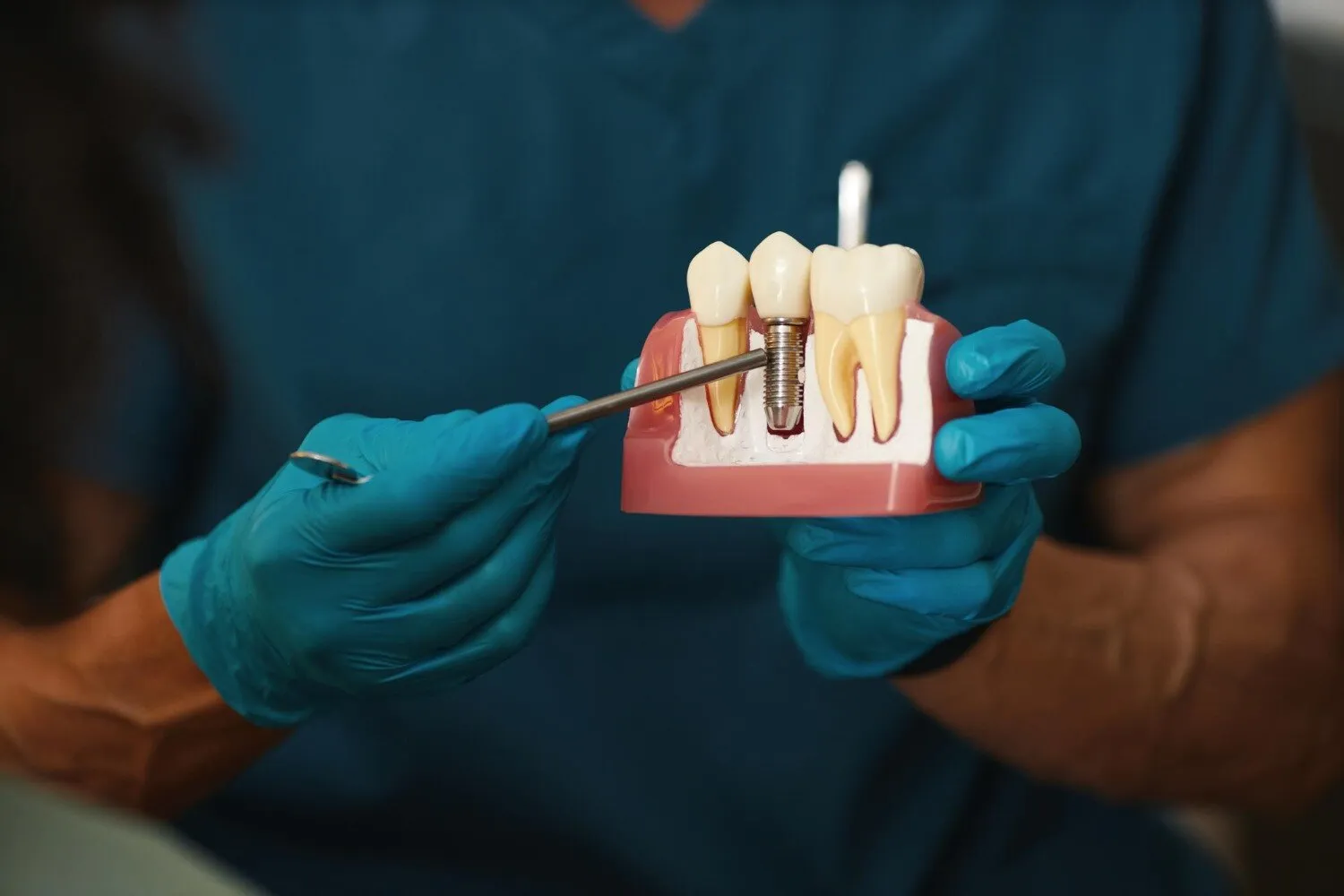
A dental implant is not the visible replacement tooth. It is a three-part system:
- Dental implant post: a biocompatible fixture placed inside the jawbone, where bone gradually bonds to its surface.
- Abutment: a connector secured to the post after healing; it supports the replacement tooth or teeth.
- Implant crown, bridge or denture: the separate visible restoration attached to the abutment. A crown replaces one tooth, while a bridge or denture replaces several.
Treatment follows a planned sequence, although timing changes with extraction healing, bone volume and gum health:
- Examination and imaging: An implant examination and X-rays assess the tooth, gums, bite and available bone. A 3D CBCT scan helps when two-dimensional images cannot show bone width, height, nerve position or sinus anatomy clearly.
- Extraction: If the damaged tooth remains, the dentist removes it and decides whether to place the post immediately or allow the socket to heal. Infection, thin bone or poor stability can favour delayed placement.
- Placement: The dental implant post is inserted into the jawbone under local anaesthesia, with sedation available for selected patients.
- Healing: Over several months, osseointegration anchors the post. A temporary tooth can sometimes be provided, but it is not the final restoration.
- Restoration: After stability is confirmed, the abutment is fitted and impressions or scans guide the final implant crown, bridge or denture.
How long does treatment take, and when is immediate placement suitable?
A temporary tooth can be fitted on the day of surgery, but that does not mean the implant is ready for its permanent crown. The implant treatment timeline may span several months when extraction healing, bone graft healing or staged surgery comes first.
Osseointegration, in which bone bonds to the implant, commonly takes about two to six months before the abutment and final crown are fitted. A temporary tooth may be non-functional or designed for light biting, so do not use it to chew hard foods unless instructed.
| Timing | What it means | When it applies |
|---|---|---|
| Immediate implant placement | The fixture enters the socket during extraction | Suitable when the socket walls and facial tissues can support the implant, infection is controlled and primary stability is strong |
| Early implant placement | The socket heals for about four to eight weeks before placement | Useful when soft-tissue healing is needed or immediate placement is less predictable |
| Delayed placement | Placement follows fuller socket healing, often after three months or graft healing | Used when infection, substantial bone loss or inadequate primary stability makes immediate placement unsafe |
Immediate implant placement is not immediate tooth replacement, and it does not stop normal post-extraction bone remodeling. Immediate loading requires stable bone, a suitable implant position, controlled bite forces and a protective temporary design.
Conventional loading remains sensible when those conditions are absent; the final crown is fitted after integration and the gum contour is stable.
What determines whether you are a good candidate?
Good dental implant candidacy depends on whether the planned tooth can be supported safely—not simply whether a gap exists. Adequate bone volume and a favourable shape must accommodate the fixture in the position needed for the final restoration. Excessive bite forces, clenching or an unbalanced bite increase overload risk.
Risk assessment focuses on these areas:
- Gum health: Active periodontitis, previous gum disease and poor plaque control increase inflammation around an implant. Stabilise periodontal disease before placement.
- Smoking: Smoking raises the risk of failed integration and impaired healing. Stopping or reducing it before surgery improves risk management.
- Diabetes control: Diabetes is not an automatic exclusion, but poor glycaemic control increases concern about healing and infection. Review control, medication and periodontal status.
- Medical history: Tell the clinician about every condition and medicine, including treatments that affect immunity, bleeding or bone metabolism.
- Oral hygiene and follow-up: You need reliable brushing, interdental cleaning and attendance at reviews. Irregular maintenance leaves inflammation or mechanical problems undiscovered.
A 3D CBCT scan enters the plan when examination and two-dimensional X-rays cannot show bone width, height, shape or nearby anatomy clearly. If bone is too thin or short for the planned position, bone grafting can rebuild the site; in the upper back jaw, a sinus lift may create height beneath the sinus.
Either procedure adds surgery, healing time, cost and risk, so neither is automatic.
What should you do before surgery, and what will recovery feel like?
Before implant surgery, complete the medical and dental checklist so preventable complications do not derail healing. Tell the clinician about every prescription, over-the-counter medicine, supplement, allergy, medical condition and previous reaction to anaesthesia.
1. Stabilize active periodontal disease and improve plaque control before placement. Poorly controlled diabetes needs medical review, and smoking cessation should begin before surgery because smoking increases implant-failure risk.
2. Complete the proposed X-rays or 3D CBCT scan, blood tests if requested, and any tooth extraction or gum treatment. Confirm the surgery date, review appointment, restoration timeline, transport and time away from work.
3. Ask what implant surgery anaesthesia is planned. Local anaesthesia numbs the area while you remain awake; oral or intravenous sedation reduces anxiety but requires an escort, and you must not drive afterward.
4. Expect swelling and bruising to increase during the first 48 to 72 hours, then settle. Use prescribed or recommended pain relief, apply a cold pack outside the cheek, and contact the clinic about worsening pain, fever, persistent bleeding or numbness.
5. Eat soft, lukewarm foods and avoid chewing over the surgical site. Do not smoke or drink alcohol. Brush the other teeth gently, keep the wound undisturbed, and use any prescribed rinse exactly as directed.
6. Avoid strenuous exercise for the first few days. Many people return to desk work within one to three days, but extensive grafting or sedation can require longer.
A consultation at Orchards Dental Care 9886020830 can review this checklist, proposed imaging and follow-up schedule before treatment begins, making dental implant recovery easier to plan.
Related service
Dental Implants Restore Your Smile Permanently with Dental Implants at Orchards Dental Care At Orchards Dental Care, Sadashiva Nagar, Bangalore, we offer advanced... View service → |
What can go wrong after an implant, and what maintenance does it need?
At five years, estimated implant-supported restoration survival is about 95% for single crowns and 93% for fixed partial dentures. Those figures are not a permanent guarantee: a crown can chip, fracture, loosen or wear even while the implant remains integrated.
An implant can also lose integration with the jawbone, causing mobility and treatment failure. Plaque-related inflammation around the implant can damage the gum and supporting bone. This is called peri-implantitis; one systematic review reported it in approximately 22% of patients and around 12% of implants, although rates vary with the diagnostic definition and follow-up period.
Treat implant maintenance as ongoing care, not a finish line. Protect the result with:
- Brush twice daily with a soft-bristled brush, cleaning around the crown, gum margin and neighbouring teeth.
- Clean under and around the restoration daily with appropriately sized interdental brushes, floss or a water flosser recommended for your design.
- Attend professional maintenance visits for plaque removal, gum and implant checks, and radiographs when indicated.
- Have your whole bite monitored, especially if you clench, grind, develop jaw discomfort or notice a change in how the teeth meet.
A history of periodontitis raises the risk of implant complications. Stabilise gum disease, control plaque and keep scheduled reviews; ignoring bleeding or looseness gives inflammation time to affect tissue and bone.
Frequently asked questions
What are the three parts of a dental implant?
A dental implant has a titanium implant post placed in the jawbone, an abutment that connects to the post, and a crown that replaces the visible tooth.
How long does dental implant treatment take?
Treatment time depends on healing, bone grafting and whether the implant is placed after extraction. Osseointegration often takes several months before the final crown is fitted.
When is immediate implant placement suitable?
Immediate placement can suit an extraction site with adequate bone, no uncontrolled infection and enough stability for the implant. Your dentist confirms this with examination and imaging.
What determines whether I am a good candidate for an implant?
Your candidacy depends on jawbone volume, gum health, general health, oral hygiene, smoking status and your ability to attend treatment and maintenance appointments.
What should you do before implant surgery, and what does recovery feel like?
Follow medication instructions, arrange transport if sedation is planned, eat as advised and avoid smoking. Expect soreness, swelling and minor bleeding after surgery; contact your dentist for severe or worsening symptoms.