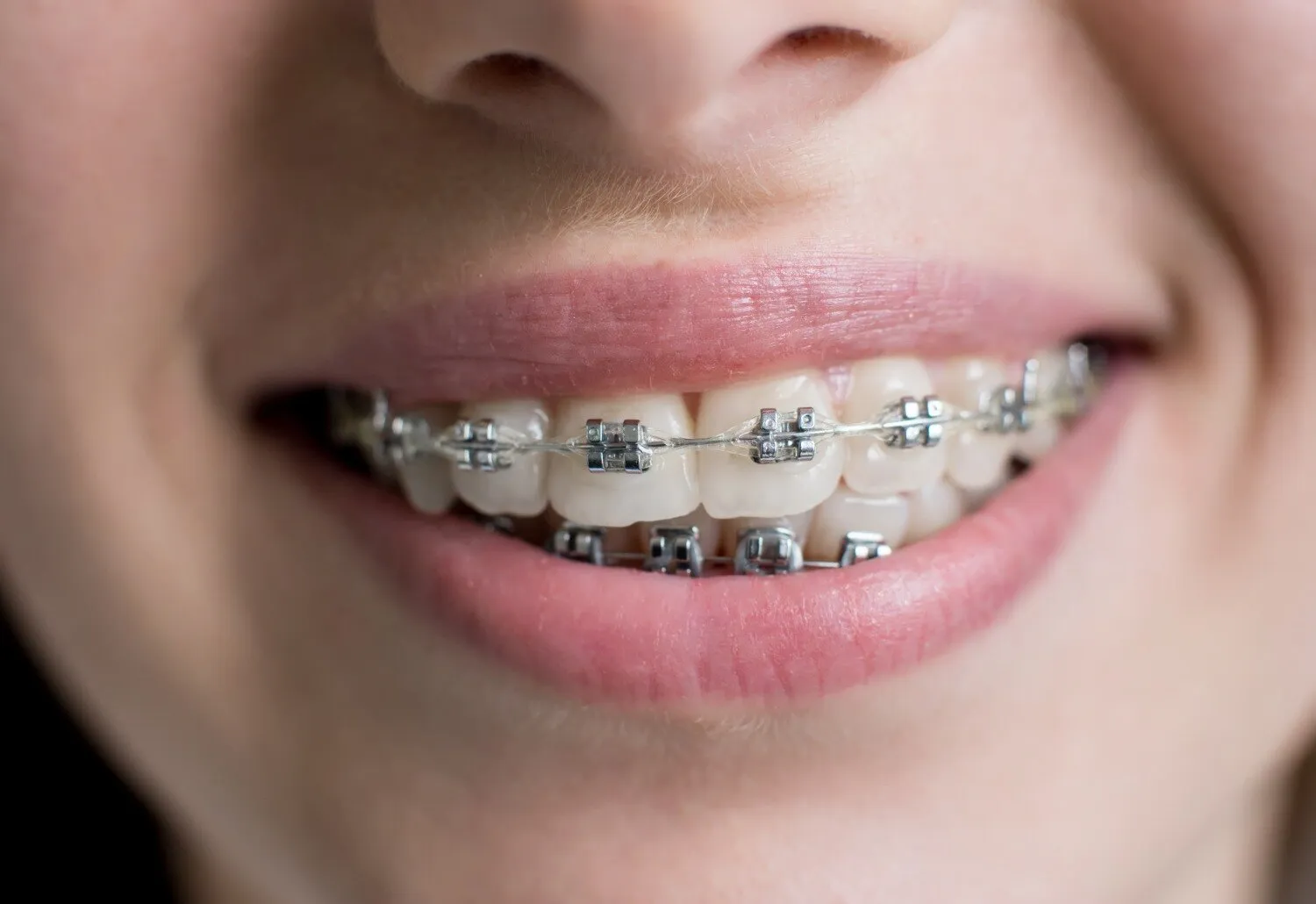
Crowded teeth are more than a cosmetic concern when they overlap, trap food, interfere with biting, or block a permanent tooth from erupting. By the end, you will know which signs justify an orthodontic assessment, how crowding is measured, and why the recommended treatment may differ between a child, teenager, and adult.
Key takeaways
- Crowding means teeth lack enough arch space to align normally.
- Ask for assessment when teeth overlap, rotate, or remain blocked out.
- Children need assessment when permanent teeth erupt unevenly or become trapped.
- Treatment may create space through expansion, enamel reduction, extraction, or tooth movement.
What counts as crowded teeth, and which signs need assessment?
A practical crowded teeth definition is a mismatch between tooth size and available dental-arch space. It produces overlapping teeth, rotated teeth, displaced teeth, or blocked-out teeth that cannot line up normally. Spacing versus crowding is the difference between visible gaps and too little room; protruding teeth project forward, even when the arch is not crowded.
| Feature | Crowding | Spacing or protrusion |
|---|---|---|
| Arch position | Teeth overlap, rotate, or sit outside their normal path | Teeth have gaps, or protruding teeth lean or sit forward |
| What to check | Space shortage, bite, eruption path, and tooth angulation | Missing contacts, excess space, jaw position, and lip prominence |
| Appearance alone | Does not establish treatment need | Does not establish treatment need |
Arrange an orthodontic examination if you notice:
- difficulty flossing between contacts or repeated food trapping
- cheek biting, tongue biting, abnormal tooth wear, or trouble biting and chewing
- delayed eruption, an unevenly late canine, or a tooth outside dental arch
- a permanent tooth emerging high, behind, or far inside the other teeth
A crowded-looking smile does not automatically require braces. An orthodontist measures the space shortage and checks the bite, gums, eruption path, and facial growth; pronounced crowding is less likely to correct spontaneously than temporary “ugly duckling” changes. Children should have an orthodontic check-up by age 7, especially when eruption is delayed or asymmetrical.
How much crowding requires treatment?
The treatment decision depends on measured space shortage, not how uneven the smile looks. During a clinical measurement, an orthodontist compares the space available around the dental arch with the combined widths of the teeth. The difference is the space deficiency, also called a tooth-size arch-size discrepancy.
Crowding measurement records this shortage in millimetres and considers tooth inclination, eruption position, bite and gum condition. The labels mild moderate severe crowding describe the amount and location of the discrepancy, but cut-offs vary between assessment methods.
Functional orthodontic treatment is recommended when crowding threatens oral health or normal use. Important triggers include:
- Difficulty biting or chewing because teeth meet incorrectly
- A traumatic bite that injures the gum, palate or opposing tooth
- An unerupted, displaced or blocked permanent tooth
- Overlapping contacts that prevent effective brushing and flossing
- Progressive periodontal damage from plaque retention around crowded teeth
- Abnormal tooth wear caused by a damaging bite
IOTN, the Index of Orthodontic Treatment Need, adds a structured priority score. Its Dental Health Component grades 4 or 5 indicate clear or very great treatment need in systems that use this index, but IOTN is not a universal biological threshold.
Cosmetic orthodontic treatment addresses appearance when function and health are satisfactory; it can be worthwhile, but a crowded-looking smile alone does not make braces medically necessary.
When should a child, teenager, or adult be assessed?
Age 7 is a useful orthodontic assessment age, not an automatic braces age. The American Association of Orthodontists recommends an early orthodontic evaluation by this point because the mixed dentition reveals how permanent teeth are developing while growth and treatment planning remain flexible.
An early review can identify severe crowding, a crossbite, harmful oral habits, or a tooth that is losing its eruption path. Interceptive treatment might create room or guide eruption, but it does not guarantee that later comprehensive braces will be unnecessary.
Starting too soon can also extend the total time in appliances when a second phase is needed after permanent teeth eruption.
Crowding during mixed dentition sometimes improves as permanent teeth erupt. Temporary spacing or angling during the “ugly duckling stage” is not the same as a permanent space shortage, so observation can be the correct choice.
Ask for reassessment if a canine erupts late, asymmetrically, unusually high, or cannot be felt in its expected position. An impacted canine can damage nearby incisor roots, making selected radiographs important.
Children and braces are not automatically linked. Teenage orthodontics often begins after most permanent teeth erupt, while adult orthodontics remains possible when teeth, gums, bone support, and bite function are suitable. Assessment is worthwhile at any age when eruption, chewing, hygiene, or appearance raises concern.
What does the orthodontic examination look for?
The orthodontic clinical examination locates the crowding and tests its cause: a tooth size mismatch, a narrow dental arch, or jaw position that redirects the bite. The orthodontist records rotations, blocked-out teeth, tooth inclinations, bite contacts, gum condition, eruption sequence, and the position of a canine that cannot be felt or seen where expected.
| Record | What it shows | Findings that change the assessment |
|---|---|---|
| Orthodontic photographs | Facial balance, smile, tooth display, and asymmetry | A shifted midline, lip strain, or facial imbalance |
| Dental impressions or intraoral scan | The three-dimensional arch shape and available space | Whether teeth overlap, rotate, or sit outside the arch |
| Panoramic radiograph | Developing teeth, roots, and eruption paths in both jaws | Retained baby teeth, extra teeth, missing teeth, impacted teeth, or abnormal canine eruption |
| Cephalometric radiograph | Side-view jaw position, facial growth pattern, and incisor inclination | A skeletal discrepancy or tooth position that photographs cannot explain |
An orthodontist selects images according to the clinical findings rather than ordering every record for every patient. A late, asymmetric, unusually high, or non-palpable canine deserves radiographic assessment because an impacted tooth can affect neighbouring roots. Comparing tooth size with arch space then separates a temporary eruption change from a persistent space deficiency.
Which treatment creates space, and what should you weigh first?
Space creation is chosen by the crowding pattern, bite, facial profile, tooth position, growth, and gum limits—not by how crowded the smile looks. Orthodontic treatment planning at Orchards Dental Care should identify whether teeth need widening, reshaping, moving backward, or extraction, and whether adult gum disease or reduced periodontal support must be treated first.
| Option | Space created or used | Main trade-off |
|---|---|---|
| fixed metal braces | Move teeth precisely; useful for complex rotations and bites | Cleaning is demanding; plaque control with braces helps prevent white-spot lesions and decay |
| ceramic braces | Use similar mechanics with less visible brackets | More fragile and still require careful cleaning |
| clear aligners | Move selected teeth through planned stages | Depend on wearing time and may struggle with severe rotations or complex bites |
| dental arch expansion | Widens a narrow arch when bone and bite permit | Overexpansion can push teeth beyond safe periodontal support |
| interproximal reduction | Controlled enamel reduction between selected teeth | Suits mild-to-moderate shortage; excessive removal risks sensitivity or poor contacts |
| extraction | Removes selected teeth to create substantial space | Changes tooth movement, facial profile, and treatment time |
Active gum inflammation, untreated decay, or weak bone support must be addressed before movement. Ask how the plan balances space, facial appearance, function, and cleaning—not just whether it avoids extraction.
Straight teeth still need orthodontic retention. A removable retainer, bonded retainer, or both may be needed long term.
Related service
Braces & Aligners Achieve a Perfectly Aligned Smile with Braces & Aligners at Orchards Dental Care At Orchards Dental Care, Sadashiva Nagar, Bangalore, we offer... View service → |
Frequently asked questions
What counts as crowded teeth?
Crowded teeth result from a mismatch between tooth size and available dental-arch space. Signs include overlapping, rotated, displaced, or blocked-out teeth.
How much crowding requires orthodontic treatment?
Treatment depends on the amount of missing space, bite function, cleaning difficulty, tooth position, growth stage, and treatment goals. An orthodontic examination determines whether monitoring or active treatment is appropriate.
When should a child, teenager, or adult be assessed for crowded teeth?
A child should be assessed when permanent teeth erupt unevenly, become trapped, or show visible displacement. Teenagers and adults should seek assessment when crowding affects cleaning, biting, appearance, or oral comfort.
What does an orthodontic examination look for?
The examination evaluates tooth positions, available arch space, bite relationships, jaw growth, facial balance, gum health, and any unerupted or displaced teeth. Photographs, dental scans, or X-rays may be recommended.
How is space created for crowded teeth?
An orthodontist may use arch expansion, enamel reduction between selected teeth, tooth movement, or extractions. The choice depends on crowding severity, tooth health, facial profile, bite, and long-term stability.