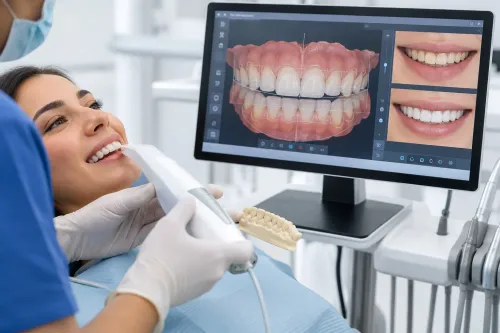
A missing tooth does not automatically call for an implant, and a bridge is not suitable for every gap. By comparing the gap pattern, supporting teeth, bite, gum health, treatment stages and cleaning demands, you can identify when a bridge deserves consideration and when another option requires attention first.
Key takeaways
- A bridge can replace adjacent gaps when enough strong support teeth remain.
- Treat active decay, gum disease, or unstable support before placing a bridge.
- Compare bridges with implants and removable partial dentures before deciding.
- Clean beneath the replacement tooth and around supporting teeth every day.
Which missing-tooth patterns can a bridge replace?
A dental bridge for one missing tooth can replace the visible gap, and a bridge for several missing teeth can span adjacent gaps. In carefully selected cases, a longer span is possible, but each extra pontic increases the load on the supporting structure.
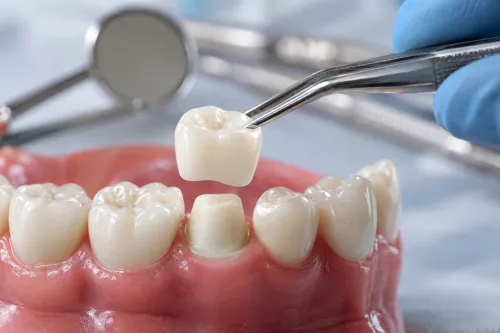
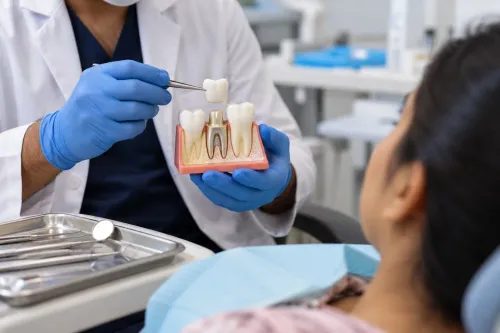
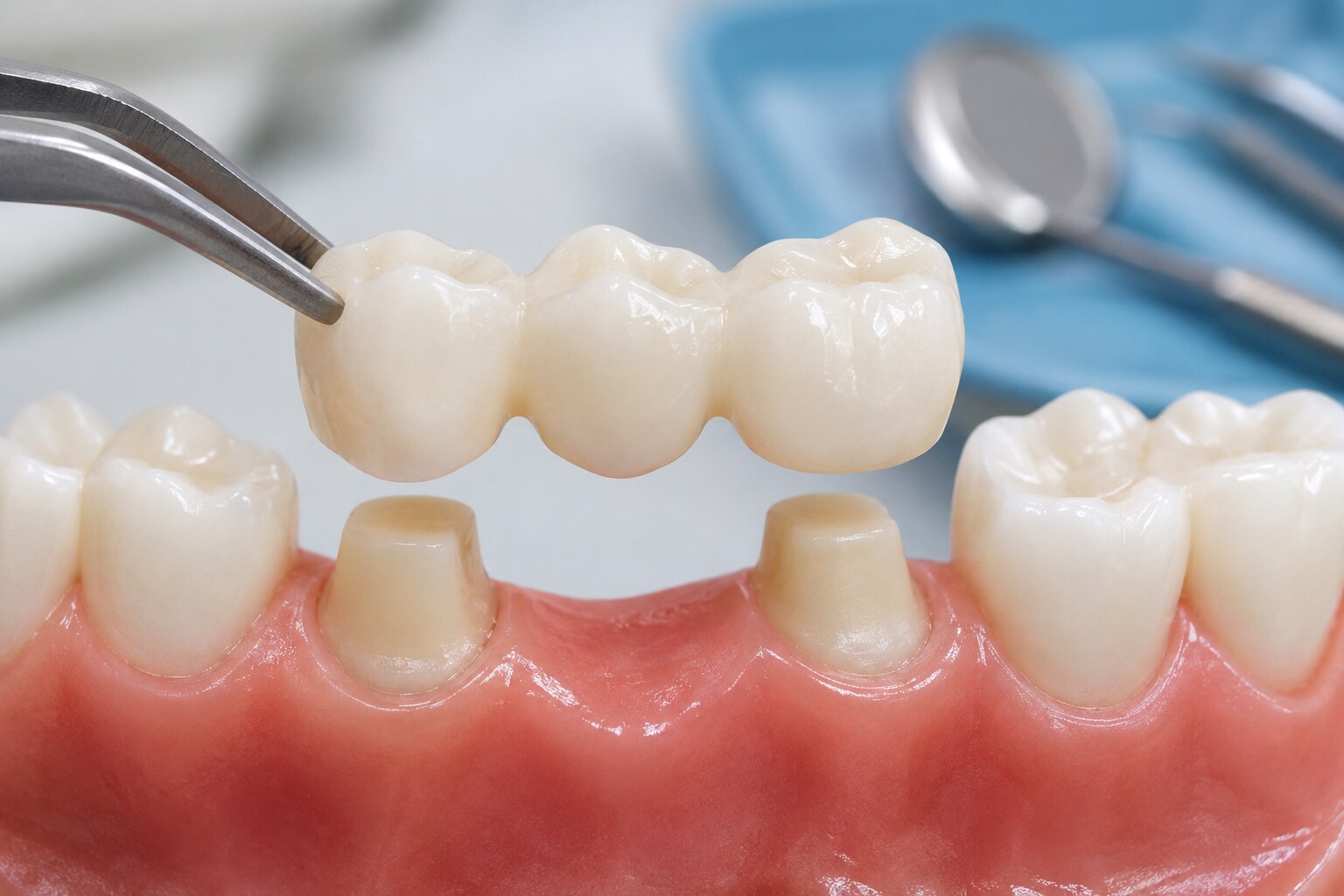
A pontic is the artificial tooth. It may be held by crowns fitted over neighbouring abutment teeth or attached to dental implants. A conventional dental bridge uses support on both sides of the gap, requires irreversible preparation of the abutment teeth, and is fixed: you cannot remove it at home.
| Option | Support | Main consideration |
|---|---|---|
| Conventional bridge | Crowns on teeth on both sides of the gap | Strong two-sided support, but healthy teeth require preparation |
| Cantilever bridge | A crown or retainer on one side only | Greater leverage; use particular caution in back teeth and heavily loaded bites |
| Maryland or resin-bonded bridge | Metal or ceramic wings bonded to the backs of adjacent teeth | Little or no enamel removal; retention depends on enamel, bite and moisture control |
The design depends on gap length, tooth position, bite force, appearance and available support. A cantilever bridge is not simply a shorter conventional bridge: supporting it from one side concentrates leverage, which can loosen the restoration or overload the abutment. A longer gap creates greater bending forces and demands stronger, better-positioned support.
A bridge replaces the visible tooth, not its root. Bone beneath the missing tooth can therefore continue to change, affecting the ridge, appearance and cleaning space under the pontic.
What must the neighbouring teeth and gums be able to support?
The teeth beside the gap must be strong enough to serve as abutment teeth: sound enamel and dentine, adequate root support, favourable alignment, firm periodontal attachment and a bite that will not overload the bridge. This is the basis of dental bridge suitability, not simply whether a crown can cover each tooth.
Assessment includes:
- A visual examination for decay, cracks, worn or leaking old fillings, gum inflammation and tooth position.
- Periodontal probing to measure pocketing and check periodontal support for bridge, bleeding and attachment loss.
- Bite analysis to identify heavy contacts, grinding forces and leverage on the proposed bridge.
- Dental X-rays for bridge planning, showing root shape, bone loss, hidden decay and previous root-canal treatment.
- Mobility testing and inspection of the available space for the pontic, connectors and cleaning access.
Active decay and uncontrolled gum disease must be treated before definitive bridge work. Crowns should not conceal disease beneath them. A dentist at Orchards Dental Care 9886020830 can use these findings to compare designs rather than treat every gap identically.
Design affects the supporting demand:
| Design | Support required | Main consideration |
|---|---|---|
| Conventional | Abutment teeth on both sides | Healthy teeth need irreversible crown preparation |
| Resin-bonded | Enamel surfaces for bonded wings | Bite and moisture control affect retention |
| Implant-supported | Implant bone and soft-tissue support | Healthy neighbouring teeth can remain uncut |
Preparing healthy teeth is irreversible, even if the bridge later needs replacement. A suitable plan must therefore protect the teeth, gums and cleaning access—not only fill the visible gap.
Related services
Crowns & Bridges Restore Your Smile with Crowns & Bridges at Orchards Dental Care At Orchards Dental Care, Sadashiva Nagar, Bangalore, we provide high-quality Dental... View service → |
Dental Implants Restore Your Smile Permanently with Dental Implants at Orchards Dental Care At Orchards Dental Care, Sadashiva Nagar, Bangalore, we offer advanced... View service → |
When should bridge treatment be delayed or rejected?
A bridge is not suitable when the neighbouring teeth are too weak to support it. Heavily decayed, cracked, mobile or poorly supported teeth need treatment, restoration or replacement before you decide on a conventional design; preparing them first can lead to failure and further tooth loss.
- Active decay, including decay under bridge abutment crowns, needs fillings, root-canal assessment or other restorative care before abutment preparation.
- Uncontrolled gum disease and dental bridge treatment do not mix. Complete periodontal treatment and improve daily plaque control before committing to a fixed restoration.
- If there is insufficient bone for implant placement, obtain implant imaging and discuss bone or soft-tissue treatment. A tooth-supported bridge remains an option only when its abutment teeth are independently strong.
- Heavy smoking warrants a cessation discussion before implant surgery or extensive restoration because it increases healing risks.
- A child with a developing jaw needs age-appropriate interim care and review, not an adult fixed replacement chosen too soon.
- A gap without enough vertical or horizontal space for the pontic or connector may need orthodontic movement or restorative space creation.
- A loose bridge needs prompt examination, not repeated cementing without identifying the cause.
The choice changes when the problem lies with the support rather than the missing tooth:
| Finding | Immediate decision | What happens next |
|---|---|---|
| Weak or cracked abutment | Delay or reject a conventional bridge | Treat, restore or replace the tooth |
| Insufficient implant bone | Delay implant treatment | Arrange imaging and discuss grafting or soft-tissue care |
| Poor space or developing jaw | Avoid an adult fixed design | Create space or use an interim plan |
If a bridge repeatedly loosens, food traps worsen, or the supporting teeth cannot be made stable, choose another replacement or leave the gap under professional review.
How does a bridge compare with an implant or removable partial denture?
Choose between a conventional bridge, implant-supported bridge, removable partial denture, or review of the gap by weighing stability, tooth preparation, surgery, treatment stages, cleaning, bone changes, medical history, appearance, bite and cost.
| Option | Main advantages | Main trade-offs |
|---|---|---|
| Conventional bridge | Fixed stability; no implant surgery; often restores function in fewer stages; predictable appearance | Irreversible preparation of neighbouring teeth; those abutments carry the bite load; clean beneath the pontic; does not replace the missing root, so bone beneath the gap continues to change |
| Implant-supported bridge | Preserves healthy adjacent teeth; implant provides support; fixed feel and appearance | Requires surgery, healing, adequate bone and soft tissue, and stricter assessment of periodontal disease, oral hygiene and heavy smoking; treatment takes more stages; bone grafting may add time and cost |
| Removable partial denture | Avoids crown preparation in the same way; can replace multiple teeth; usually lower initial cost | Remove it for cleaning; it can move during chewing; clasps affect appearance; comfort, bite adaptation and maintenance require attention |
| Leave the gap under review | No procedure, preparation or surgical risk; avoids treatment cost | Teeth can drift, chewing or appearance may suffer, and bone changes continue; needs professional review |
The dental bridge vs implant choice often favours a bridge when suitable abutment teeth are strong and you want fixed versus removable tooth replacement without surgery. The dental bridge vs partial denture choice favours a denture when several teeth are missing or preserving tooth structure matters more than maximum stability.
An implant is not automatically better. If the gap does not affect function or appearance, monitoring it after professional assessment can be reasonable.
What daily care and long-term upkeep does a bridge require?
A bridge needs daily plaque control and scheduled reviews; it is not a fit-and-forget replacement. Brush twice daily with fluoride toothpaste, then clean beneath the pontic, the artificial tooth, and around each connector.
- How to clean under a dental bridge: use a floss threader, superfloss, interdental brush or the method demonstrated by your dental team. A toothbrush cannot clean the tissue-facing surface beneath the pontic.
- Keep review appointments so the dentist can inspect crown margins, abutment teeth, gums, bite, cement loss and changes in the residual ridge.
- Seek prompt assessment if the bridge feels loose, causes bleeding or traps food. Do not repeatedly re-cement a loose dental bridge without finding why it lost stability.
- Continue preventive care even when the bridge feels comfortable. Plaque around its edges can damage the supporting teeth and gums.
Dental bridge maintenance matters because bridges are not lifetime restorations. Biological problems include decay at crown margins and loss of periodontal support; technical problems include debonding, loss of retention, connector fracture and ceramic or framework fracture. Your dental bridge lifespan depends on the bridge design, bite, abutment health and cleaning.
A conventional bridge may restore chewing and appearance without surgery, but it transfers maintenance demands to the supporting teeth. It also replaces the visible tooth, not its root, so the residual ridge can continue to change; an implant can support the missing area differently.
Frequently asked questions
Which missing-tooth patterns can a dental bridge replace?
A bridge can replace one missing tooth or several adjacent missing teeth when the pattern provides suitable supporting teeth. Longer spans place greater load on the supporting structure.
What must neighbouring teeth and gums support?
Neighbouring teeth need enough strength and stability to anchor the bridge, while the gums and supporting bone need to be healthy enough to tolerate the load.
When should bridge treatment be delayed or rejected?
Delay treatment until active decay, gum disease, infection, or unstable supporting teeth are treated. Reject a bridge when the remaining support cannot reliably carry the planned span.
How does a bridge compare with an implant or removable partial denture?
A bridge uses neighbouring teeth for support, an implant uses a post placed in the jaw, and a removable partial denture can be taken out for cleaning. Your tooth pattern, bone, gum health, maintenance preferences, and treatment requirements determine the better option.
What daily care does a dental bridge require?
Brush twice daily, clean around the supporting teeth, and use floss threaders or an interdental cleaner beneath the replacement tooth. Attend reviews when advised so the bridge, gums, and supporting teeth can be checked.