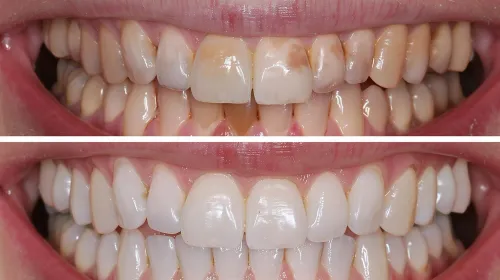
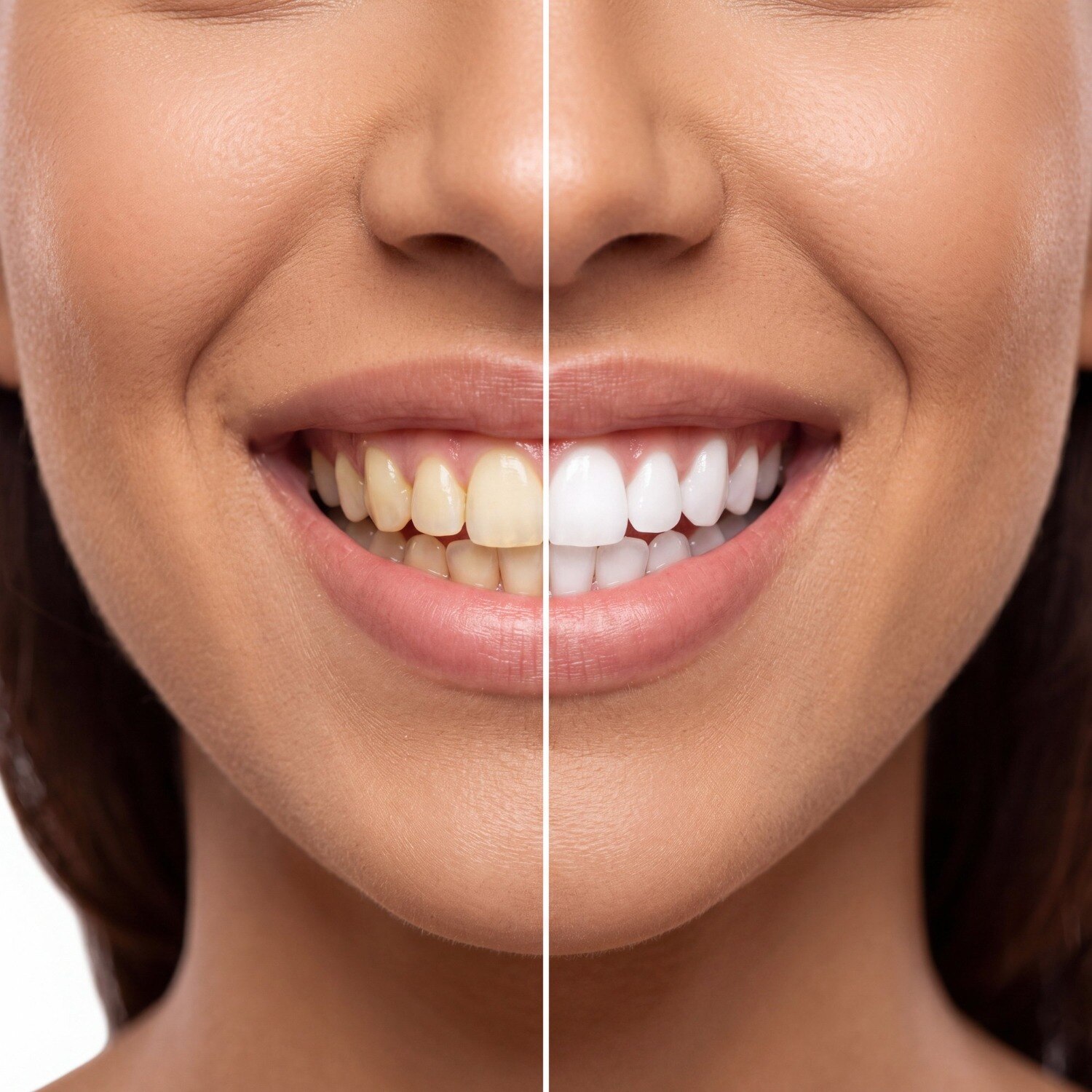
Whitening can noticeably brighten natural teeth, but the result depends on whether the discoloration sits on the surface, inside the enamel or within the tooth itself. You will be able to judge a likely shade change, compare treatment methods, identify stains that need another solution and plan maintenance without expecting permanent, uniform whiteness.
Key takeaways
- Expect about one to three shade-guide steps of improvement.
- Peroxide works best on surface and age-related yellow stains.
- Crowns, veneers and fillings will not whiten with peroxide.
- Use dentist-approved maintenance and limit frequent whitening treatments.
How many shades lighter can stained teeth become?
A realistic target is about one to three shade-guide steps lighter, not a guaranteed “perfect white.” Mild tooth staining often shows the clearest improvement; moderate tooth discoloration can improve noticeably but may retain some yellow or brown tone. Severe tooth staining may improve only slightly or unevenly.
| Staining level | Realistic change | What can limit the result |
|---|---|---|
| Mild tooth staining | About 1–3 shade steps | The tooth may approach a lighter natural shade, but not necessarily paper white |
| Moderate tooth discoloration | About 1–3 shade steps | Deeper or long-standing discoloration can leave a visible undertone |
| Severe tooth staining | About 0–2 shade steps | Intrinsic staining, a damaged tooth or thin enamel may respond poorly to external whitening |
A dentist measures teeth whitening results by recording the starting shade against a standardized guide, such as the VITA Classical shade guide, then repeating the comparison after treatment. Some clinics also use a spectrophotometer, which records color numerically instead of relying on a photograph or your memory.
Do not judge the final shade immediately after whitening. Dehydrated enamel can look temporarily brighter; assessment after the teeth rehydrate gives a more stable comparison. The same lighting, shade guide and tooth position make the before-and-after reading more reliable.
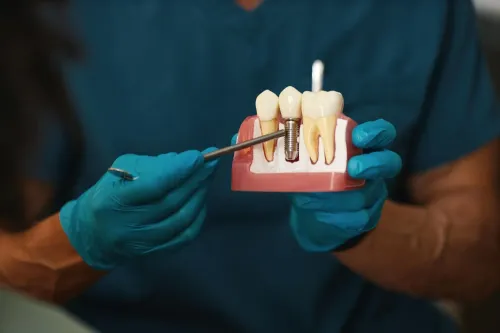
Whitening changes natural tooth structure, not crowns, veneers, fillings or implant crowns. If one dark tooth followed an injury or root-canal treatment, ordinary external whitening may leave it behind and needs examination first.
How quickly do different whitening methods show results?
In-clinic teeth whitening gives the quickest visible change: usually within one appointment lasting about 60–90 minutes. Take-home whitening trays show a gradual change over several days to two weeks, while over-the-counter products usually need repeated use for two to four weeks and produce less predictable results.
| Option | Speed and appointments | Consistency, sensitivity and predictability |
|---|---|---|
| In-clinic teeth whitening | One dental appointment; visible change the same day | Even application and controlled concentration improve consistency. Cold sensitivity can start during or after treatment. |
| Take-home whitening trays | Examination and tray fitting, then home use for several days to two weeks | Custom trays hold whitening gel evenly, improving control. Sensitivity depends on gel strength, wear time and frequency. |
| Over-the-counter whitening strips | No appointment; use for the labelled duration, often over one to two weeks | Uneven contact can leave patchy areas. Strips can irritate gums or cause sensitivity if overused. |
| Over-the-counter whitening gel | No appointment; timing varies by product and applicator | Results depend on how evenly you apply the gel. Excess gel increases gum irritation without reliably speeding whitening. |
| Whitening toothpaste or powder | No appointment; changes appear slowly with regular brushing | These mainly remove surface stains, not deeper colour. Abrasive powders can wear enamel or irritate gums when used aggressively. |
A dentist can adjust tray fit, gel strength and wear time when sensitivity occurs. Stop if you develop sharp pain, gum burning or persistent irritation; using more product or leaving it on longer will not make whitening safer or reliably faster.
Which stains respond to peroxide whitening—and which do not?
Coffee, tea, tobacco, red wine and food stains usually respond to peroxide teeth whitening when pigments sit on enamel or within its outer layers. Peroxide breaks down coloured molecules, so surface staining lightens more predictably than a naturally dark tooth. Whitening toothpaste mainly polishes surface deposits; it is not equivalent.
| Stain or change | Likely response | What you need |
|---|---|---|
| Coffee, tea, tobacco, red wine, food stains | Often responds | Peroxide treatment; reduce new exposure |
| Tetracycline staining | Limited or uneven | Examination; extended whitening or veneers may be discussed |
| Dental fluorosis | Variable; white or brown marks can remain | Assess the enamel pattern before treatment |
| Traumatized tooth discoloration | Poor response to external whitening | Check the tooth; internal bleaching or restoration may fit |
| Decay or a leaking filling | Not a whitening problem | Treat the disease or faulty restoration first |
| Exposed dentin | Whitening can trigger sharp sensitivity | Find and protect the exposed area before whitening |
| Discoloration inside a tooth | External whitening may miss it | Examine the tooth and consider internal treatment |
Tetracycline staining develops within tooth structure, while dental fluorosis creates altered enamel; neither behaves like a coffee film. Whitening can also make white spots, bands or fluorosis marks stand out because surrounding enamel lightens first.
A single gray or brown traumatized tooth, especially after root-canal treatment, needs examination because external whitening may brighten its neighbours without correcting the cause.
Do not whiten over decay, cracks, leaking restorations or active gum disease. Exposed dentin and an inflamed tooth can hurt more when peroxide penetrates, and treatment may worsen the problem rather than hide it.
What if your crowns, veneers or fillings do not match afterward?
A crown can look darker after whitening because the crown has not changed; the natural teeth beside it have. Peroxide alters the colour of enamel and dentin, but it does not lighten porcelain, zirconium, composite fillings or other restorative materials. That is why whitening with crowns already in place can create mismatched dental restorations.
Before treatment, ask the dentist to record your current shade and plan the final shade for every visible restoration:
- Porcelain or zirconium crowns, bridges and implant crowns
- Veneers
- Composite fillings and cosmetic bonding
- Restorations on teeth that show when you smile
The usual sequence is to whiten the natural teeth first, allow them to rehydrate and settle, then match replacement work to that shade. Replacing a crown, veneer, filling or bonding is the dependable way to correct a visible mismatch; whitening fillings will not change their colour.
Replacement also takes time and may require removing sound restoration material, so accept the difference if it is hidden or minor.
Do not whiten over decay, leaking fillings, cracks or active gum disease. A dark single tooth after trauma or root-canal treatment needs examination because internal bleaching or a crown may work better than external whitening.
White spots, fluorosis bands or uneven enamel can become more obvious after whitening. If they remain distracting, ask about resin infiltration, enamel microabrasion, composite reshaping or veneers. Orchards Dental Care can help compare those options with crown replacement when shade planning is the real issue.
Related service
Teeth Whitening Brighten Your Smile with Professional Teeth Whitening at Orchards Dental Care At Orchards Dental Care, Sadashiva Nagar, Bangalore, we offer advanced... View service → |
How long will the result last, and what maintenance is safe?
How long teeth whitening lasts varies with your starting shade, enamel, diet and tobacco exposure. Many people notice gradual darkening over months, not a permanent result. Coffee, tea, tobacco, paan, red wine and strongly coloured foods can bring surface stains back faster.
- Limit coffee, tea, red wine and coloured foods during the first 24 to 48 hours, while avoiding tobacco and paan altogether.
- Rinse with water after staining drinks or foods, and brush twice daily with a fluoride toothpaste.
- Use a dentist-supplied whitening touch-up only when your dentist confirms it is appropriate and gives the interval and contact time.
- Do not extend treatment, use concentrated peroxide, or combine strips, gels and trays to speed up whitening.
Whitening maintenance usually means occasional, short courses rather than continuous use. Follow the product instructions or your dentist’s plan; stop if you develop sharp pain, persistent teeth whitening sensitivity, gum burning or white patches on the gums. A review is safer than adding more peroxide.
Teeth can look unusually light immediately after treatment because dehydration temporarily changes their appearance. Once enamel rehydrates over the next day or two, the shade can settle darker, so judge the result after rehydration rather than at the end of the appointment.
Obtain dental advice before whitening if you are pregnant or breastfeeding, or if the patient is a child. Arrange an examination first for untreated decay, leaking fillings, cracked teeth, exposed dentin, severe sensitivity or active gum disease; peroxide can worsen symptoms and cannot repair the cause.
Frequently asked questions
How many shades lighter can stained teeth become?
A realistic result is about one to three shade-guide steps lighter. Mild staining often improves most clearly; severe staining can remain uneven or retain yellow or brown tones.
How quickly do different whitening methods show results?
In-office whitening can show a visible change during one appointment. Dentist-provided trays and over-the-counter strips build results over repeated applications, while whitening toothpaste mainly removes surface stains rather than changing the tooth’s underlying colour.
Which stains respond to peroxide whitening?
Peroxide usually responds best to surface and age-related yellow stains. Brown, deep internal, medication-related or injury-related discoloration can respond unevenly or show little change, so a dental examination helps identify the cause.
What happens if crowns, veneers or fillings do not match afterward?
Peroxide does not whiten crowns, veneers or tooth-coloured fillings. Whiten natural teeth before replacing visible restorations, then ask your dentist to match the new shade.
How long do whitening results last, and what maintenance is safe?
Results fade as new staining accumulates. Reduce tobacco, tea, coffee and strongly coloured foods, clean between teeth, and use only the touch-up schedule recommended by your dentist to limit sensitivity and enamel irritation.