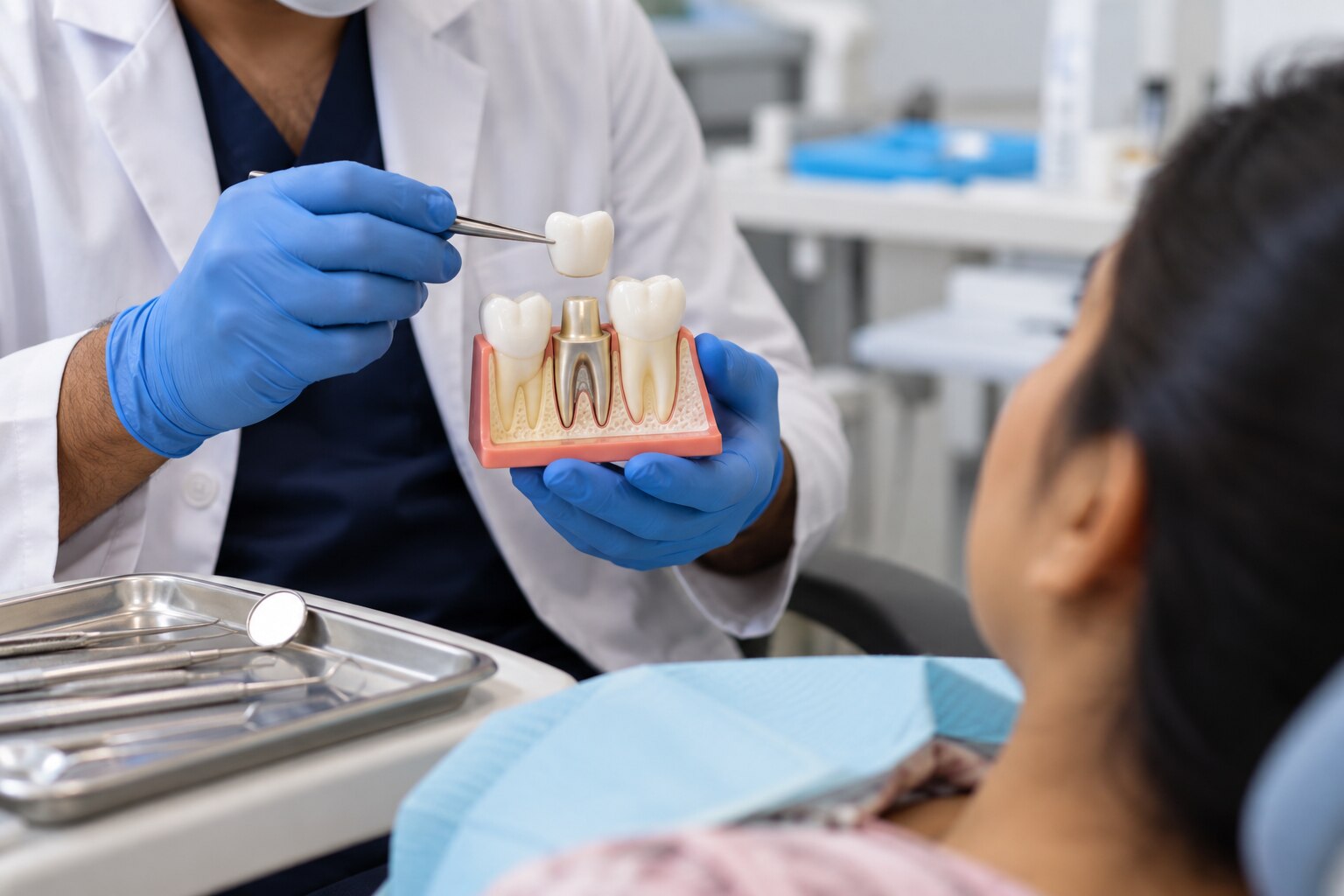
A crown is not chosen simply because a tooth hurts, has a filling, or has undergone root canal treatment. The recommendation depends on how much sound tooth remains, where the damage lies, how the tooth handles chewing forces, and whether it can be cleaned and sealed predictably. By the end, you will know which findings support a crown, which alternatives may preserve more tooth, and when a tooth is not suitable for one.
Key takeaways
- Cracked cusps, deep decay and thin tooth walls often require crown protection.
- A tooth needs enough sound structure and a healthy root to support a crown.
- Choose a crown when a filling cannot protect weakened walls from chewing forces.
- Root canal-treated back teeth often need crowns because they have higher fracture risk.
Which types of tooth damage make a crown necessary?
A filling may no longer protect a tooth when too little sound enamel and dentine remain to resist chewing forces. The warning signs are weakened cusps, visible cracks, recurrent decay, flexing walls, or a restoration that no longer seals the tooth.
| Finding | Why a filling may be inadequate | Crown implication |
|---|---|---|
| cusp fractured below the chewing surface | The fracture leaves the cusp unsupported, so biting can extend the break | A crown can cover and brace the remaining tooth |
| extensive loss of enamel and dentine | A large cavity or previous restoration leaves thin walls that may split | Full coverage may protect more structure than another filling |
| large failing filling | Loose edges, leakage, recurrent decay or a fractured margin show that the repair has lost its seal | Replacing it with another filling may not restore strength |
| severe wear | Flattened, shortened surfaces reduce protective tooth structure and concentrate bite forces | A crown may rebuild the shape when enough tooth remains |
| crack that does not extend into the root | The tooth can still be restorable, but the crack weakens the biting surface | A crown may hold the cracked segments together |
A root canal-treated tooth with substantial loss of its cusps or marginal ridges, especially a premolar or molar, often needs cuspal coverage because posterior teeth absorb high chewing loads. An intact or minimally restored front tooth may instead receive a bonded filling.
A crack below the gum line or into the root changes the decision: a crown cannot reliably rescue a split tooth or vertical root fracture.
How does a dentist decide whether the tooth can support a crown?
A crown is suitable when enough sound tooth remains to hold it, the crack is confined to the crown, and the tooth can be cleaned, sealed and maintained. Root canal treatment alone does not decide the outcome; lost tooth structure, tooth position and chewing forces matter more.
1. During the dental examination, the dentist checks the remaining tooth walls, cusps and the amount of sound structure above the future crown margin. An encircling band of sound tooth, called a ferrule, improves fracture resistance.
A tooth with little structure above the gum may need gum or bone reshaping before restoration, or may not be restorable.
2. The dentist locates and tests cracks by inspecting the tooth, using magnification, checking for isolated gum pockets and assessing symptoms when you bite. A crack limited to the crown can often be covered; one extending below the gum line, splitting the tooth or reaching the root makes a crown unreliable.
3. Dental X-rays show root shape, bone support, previous root canal treatment and infection, although a fine crack may not appear. A bite assessment identifies heavy contact, grinding and opposing teeth that could overload the crown, especially on molars.
The final question is restorability: can the tooth receive a stable margin, remain cleanable and withstand function? If not, extraction may be safer than placing a crown that cannot be sealed or maintained.
When is a crown better than a filling, veneer, inlay or onlay?
In a crown versus filling decision, size and location matter most: a contained defect can take a direct filling, while damage that weakens cusps or surrounds the tooth needs coverage. A front-tooth surface defect may suit a veneer, but a chewing-surface defect often needs an inlay, onlay or crown.
| Option | Damage pattern | When it applies |
|---|---|---|
| Direct filling | Small or moderate cavity within intact walls | Use when enough enamel and dentine remain to resist chewing forces |
| Veneer | Damage or discoloration limited mainly to the front surface | Use for selected front teeth when the back and edges remain strong |
| Inlay | A larger cavity contained between the cusps | Use when the cusps are sound but a direct filling would be too large |
| Onlay | Damage includes one or more weakened cusps | Use when cuspal coverage is needed but substantial outer tooth structure remains |
| Full crown | Damage surrounds the tooth, extends across several surfaces, or leaves thin walls | Use after major fracture, severe wear, a large failing restoration, or extensive root canal access and decay |
A crown requires removing additional tooth structure to create material space and a sealed margin. Do not choose it for a small filling or mild discoloration when a bonded restoration would preserve more healthy tissue.
After root canal treatment, an intact front tooth may need only a bonded filling. A posterior tooth with missing cusps, large restorations or high chewing loads more often needs an onlay or crown to prevent fracture.
Why do some root canal-treated teeth need crowns while others do not?
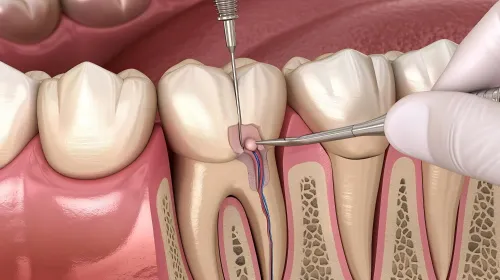
A root canal-treated tooth needs cuspal coverage when removing decay, cracks, the access opening or a large filling has left its cusps thin and unsupported. A crown, onlay or another bonded restoration can protect those cusps from flexing and splitting under chewing forces.
Tooth position changes the risk. Root canal-treated posterior teeth absorb heavy vertical and sideways loads, so cuspal coverage is commonly recommended, especially when several walls or marginal ridges are missing.
Root canal-treated front teeth may need only a bonded filling when the tooth is intact or minimally restored and most external walls and marginal ridges remain sound.
The decision depends on how much healthy tooth remains above the planned restoration margin. A broad, sound band around the tooth creates the ferrule effect, which helps the crown resist levering forces; placing a deeper margin is not a substitute for missing structure and may require gum or bone adjustment.
- Choose cuspal coverage when a back tooth has lost multiple walls, a cusp is undermined, or a large restoration leaves the tooth flexing.
- Consider a bonded filling for a front tooth with intact external structure, stable margins and manageable bite forces.
- Use a post only when too little coronal tooth remains to retain the core. A post supports the buildup; it does not strengthen the root, and unnecessary drilling can increase fracture risk.
- Reconsider a crown when no ferrule can be obtained, a crack extends into the root, or the remaining tooth cannot retain a sealed restoration.
What happens when a crown is planned, and when is another treatment safer?
Treatment starts only after active decay, gum disease and an inadequately treated root canal are controlled. A crown placed over ongoing disease can hide it, complicate retreatment and fail at the margin.
- The dentist removes decay and failing restoration, checks the crack, bite and X-rays, and confirms that sound tooth structure remains.
- If the visible tooth is too damaged to hold a crown, a core build-up replaces missing structure. A post does not strengthen the root; it mainly retains the core when too little tooth remains.
- During tooth preparation, the dentist creates space for the crown while preserving a ferrule: a band of sound tooth above the margin that helps resist fracture.
- The dentist records the shape with a digital scan or impression, fits a temporary crown, then checks the final crown’s contacts, bite and cleanability before cementing it.
A different treatment is safer when the tooth cannot be predictably sealed or supported. Crown lengthening exposes more sound tooth when decay or a fracture ends near the gum; orthodontic extrusion slowly moves a restorable short tooth into view while preserving bone.
A crack extending below the gum into the root, a split tooth or a vertical root fracture usually calls for extraction, not a crown. Poor bone support from advanced gum disease can also make extraction and implant planning more predictable.
At Orchards Dental Care 9886020830, ask which finding makes your tooth restorable and whether crown lengthening, extrusion or extraction changes the long-term plan before approving preparation.
Related services
Crowns & Bridges Restore Your Smile with Crowns & Bridges at Orchards Dental Care At Orchards Dental Care, Sadashiva Nagar, Bangalore, we provide high-quality Dental... View service → |
Zirconium Crowns Restore Strength and Beauty with Zirconium Crowns at Orchards Dental Care At Orchards Dental Care, Sadashiva Nagar, Bangalore, we offer... View service → |
Frequently asked questions
Which types of tooth damage make a crown necessary?
A crown is considered when a tooth has weakened cusps, visible cracks, deep or recurrent decay, flexing walls, or a failing restoration that no longer seals it.
How does a dentist decide whether the tooth can support a crown?
The dentist checks how much sound enamel and dentine remain, whether the crack extends below the gum, the condition of the root and surrounding bone, and whether the tooth can be restored to a stable shape.
When is a crown better than a filling, veneer, inlay or onlay?
A crown covers and reinforces most of the tooth when its walls or cusps are too weak for a filling. A veneer suits the visible front surface, while an inlay or onlay preserves more tooth when the remaining structure is strong enough.
Why do some root canal-treated teeth need crowns while others do not?
Root canal treatment removes infected tissue but does not automatically require a crown. Back teeth with substantial loss of structure often need one because chewing forces increase fracture risk; a front tooth with strong remaining walls may need a different restoration.
What happens when a crown is planned, and when is another treatment safer?
The dentist removes decay, reshapes the tooth, checks the bite, records its shape, and fits a temporary restoration before placing the final crown. Extraction, root canal treatment, a filling, or an inlay or onlay is safer when the tooth cannot hold a crown, the crack reaches the root, or too little healthy structure remains.
Related services
Root Canal Treatment (RCT) Save Your Natural Tooth with Expert Root Canal Treatment at Orchards Dental Care At Orchards Dental Care, Sadashiva Nagar, Bangalore, we provide... View service → |
Dental Filling Restore Your Tooth with Advanced Dental Filling at Orchards Dental Care At Orchards Dental Care, Sadashiva Nagar, Bangalore, we provide high-quality... View service → |