Losing a tooth changes more than the appearance of a smile. Depending on its location, a missing tooth may affect chewing, speech, neighbouring tooth positions, and the way biting forces are distributed. Dental Bridges are one established method of replacing missing teeth, but they should be considered alongside other available options.
For patients in RMV, Karnataka, choosing a replacement method depends on the condition of the surrounding teeth, gums, bone, bite, and individual preferences.
How a Dental Bridge Works
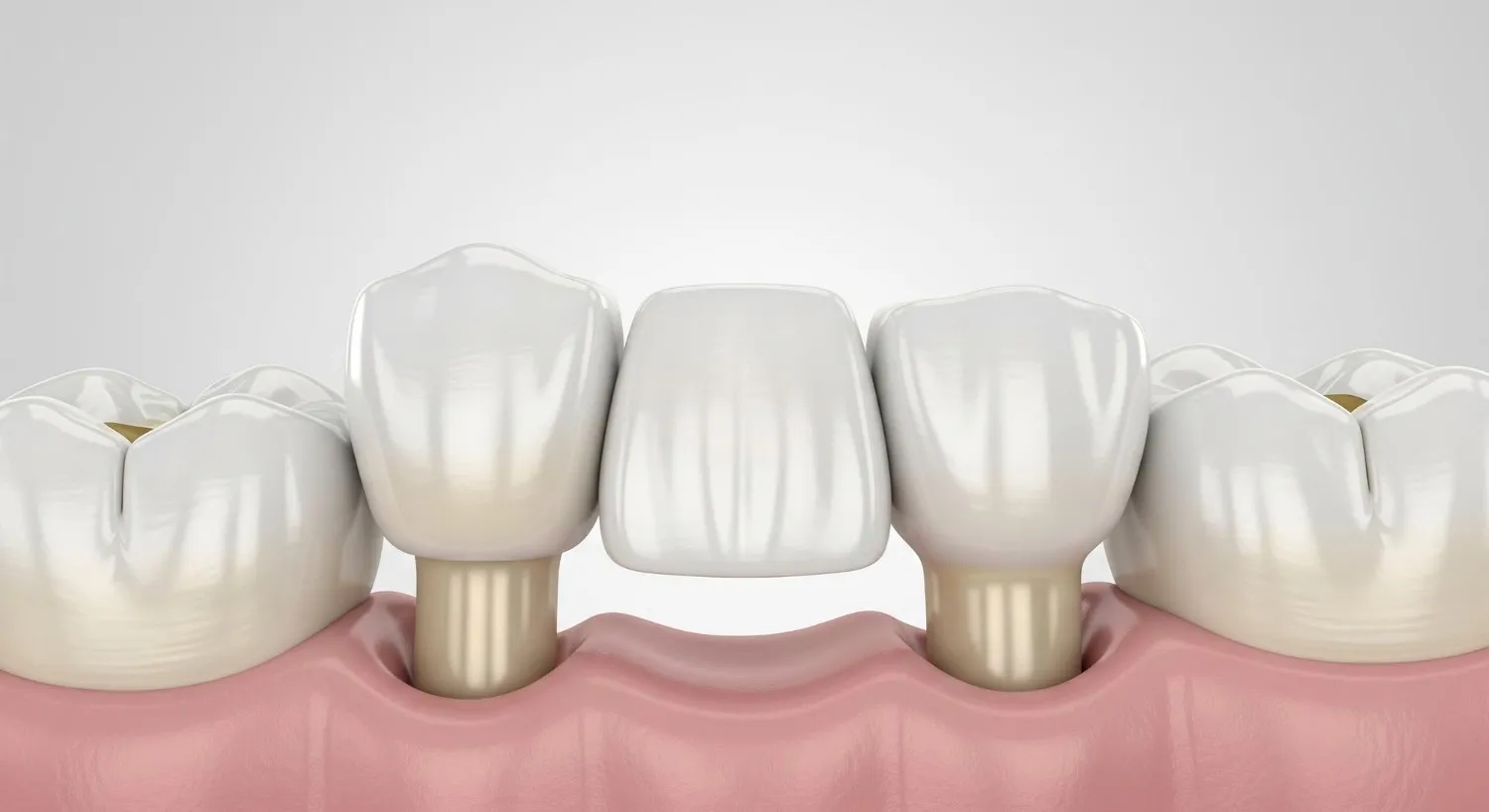
A traditional bridge uses neighbouring teeth to support an artificial replacement tooth.
The restoration effectively spans the space created by the missing tooth. Other bridge designs may be used in particular circumstances, so treatment needs to be selected according to the location and condition of the gap.
When Can a Bridge Be a Practical Choice
A bridge may be considered when:
- One or more teeth are missing
- Suitable supporting teeth are available
- A fixed replacement is preferred
- Implant treatment is unsuitable or not preferred
- Existing neighbouring teeth already require substantial restoration
The condition of the supporting teeth is particularly important because they must tolerate the forces transmitted through the bridge.
How Does a Bridge Differ From an Implant
A dental implant replaces a missing tooth using an implant placed in the jawbone, followed by an appropriate restoration after assessment and healing.
A traditional bridge instead obtains support from neighbouring natural teeth.
Neither option should automatically be considered superior in every situation.
An implant may avoid preparing healthy adjacent teeth, while a bridge may be appropriate when neighbouring teeth already need crowns or when implant treatment is not suitable.
What About Removable Dentures
Removable dentures are another tooth replacement option, especially when several teeth are missing.
Unlike a fixed bridge, they are designed to be removed by the patient. Their suitability depends on the number and position of missing teeth, available support, patient preference, and treatment objectives.
Important Questions Before Choosing a Bridge
Patients evaluating Dental Bridges should understand:
- Which teeth will support the restoration?
- Are those teeth healthy enough?
- How will the area beneath the bridge be cleaned?
- What material is being considered?
- Are implants also clinically possible?
- How will the restoration affect the bite?
- What maintenance will be required?
These questions help shift the decision from simply filling a visible gap to selecting a sustainable tooth replacement strategy.
Cleaning Under a Bridge
Because the replacement tooth is connected to supporting restorations, normal flossing techniques may not be sufficient beneath certain bridge designs.
Patients may need floss threaders, interdental brushes, water-based cleaning devices, or another method recommended according to the restoration.
This daily maintenance matters because the supporting natural teeth remain vulnerable to plaque-related problems.
At Orchards Dental Care, missing-tooth assessment can include the condition of adjacent teeth, available bone, gum health, bite, and suitable fixed or removable replacement possibilities.
Replacing a missing tooth is ultimately about restoring useful function while protecting the remaining mouth. A bridge can be an effective option in appropriately selected cases, but comparing its advantages, limitations, and maintenance requirements with alternative treatments helps patients make a better-informed decision.
Keywords