An infected tooth can produce severe pain, but it can also become quiet after the pulp dies while the infection continues around the root. You will learn which symptoms need prompt dental assessment, which signs require emergency care, how dentists confirm the cause, and how root canal treatment compares with other options.
Key takeaways
- Persistent pain after hot or cold drinks needs a dental examination.
- Seek urgent care for facial swelling, fever, or trouble swallowing or breathing.
- A dentist uses examination, tapping tests, X-rays, and vitality testing.
- Compare saving the tooth with root canal treatment against extraction and replacement needs.
Warning signs that an infected tooth needs attention
Common infected tooth symptoms include a persistent toothache, pain on biting or chewing, and hot and cold sensitivity that continues after the drink or food is removed. A tooth that feels “high” or hurts when tapped can signal inflammation around its root.
- Swelling beside the tooth or in the face
- A gum boil, pimple, pus, or a foul taste
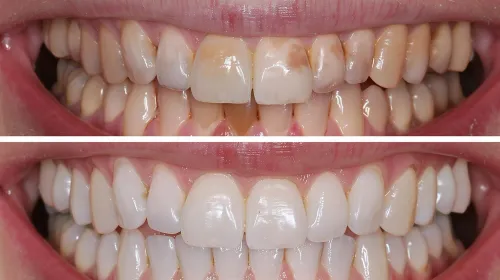
- Darkening or greying of the tooth
- Fever or swollen neck glands
- Difficulty opening your mouth
| Symptom pattern | What it can suggest | Why examination matters |
|---|---|---|
| Lingering hot or cold pain | Inflamed pulp that may not recover | Temperature symptoms alone do not prove that root canal treatment is needed |
| Pain on biting | Inflammation around the root, a crack, or a defective filling | These causes require different treatments |
| Brief sensitivity that stops immediately | Exposed dentine or a cavity | A filling may be suitable, but testing is needed |
| One-sided upper-tooth pressure | Sinus-related pain | Sinus disease can imitate toothache |
| Jaw soreness without a tooth-specific response | Temporomandibular joint or muscle pain | The source may not be the tooth |
Do not assume that less pain means the infection has cleared. A dying pulp can stop responding to hot or cold, while infection continues around the root tip; early disease can also produce a normal-looking X-ray. Arrange a prompt dental examination for any new swelling, drainage, darkening, or ongoing pain.
When dental pain becomes an emergency
Arrange a prompt dental appointment today if you have swollen gums, a gum boil, pus, worsening tooth pain, pain when biting, fever and swollen lymph nodes. These signs can indicate a dental abscess or infection spreading beyond the tooth. Do not wait several days to see whether it settles.
Seek same-day emergency dental care for increasing facial swelling, fever, or difficulty opening your mouth. Go to a hospital emergency department immediately if swelling reaches your neck or affects breathing, swallowing, or speaking, or if you feel confused or severely unwell.
- Take paracetamol or ibuprofen only if you can safely use them, following the package dose. Do not exceed the stated maximum.
- Rinse gently with warm salt water, then spit it out. Do not scrub the swollen area.
- Place a cold compress against the cheek for 10 to 15 minutes at a time.
- Eat soft foods, chew on the opposite side, and keep your head elevated when resting.
Do not press or pop a gum boil, put aspirin on the tooth, or use leftover antibiotics. Antibiotics do not remove infected pulp or replace drainage, root canal treatment, or extraction. If a gum boil drains and the pain eases, the dental abscess has not necessarily cleared; keep the appointment.
How a dentist confirms the cause of tooth pain
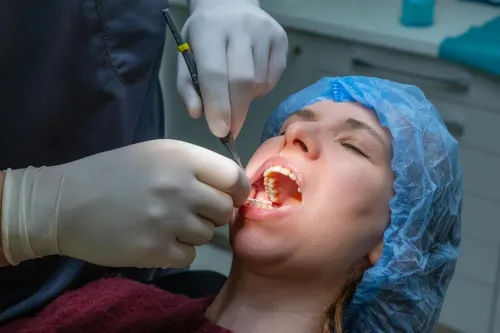
A dentist confirms the cause of tooth pain by combining your symptom history with targeted tests, not by relying on one complaint. A root canal diagnosis may include cold testing, an electrical pulp test, a percussion test, palpation around the root, gum probing, bite testing and a dental X-ray.
| Possible source | Findings that help separate it |
|---|---|
| Inflamed or infected pulp | Cold pain that lingers, spontaneous pain, or tenderness when tapping the tooth. A dead pulp may give no cold response while infection remains; early disease can also look normal on an X-ray. |
| Cavity | Sensitivity to cold or sweet that stops quickly, with decay visible during examination. Pain usually occurs only when the trigger reaches the damaged area. |
| Cracked tooth | Sharp pain on biting or releasing the bite, often with inconsistent cold sensitivity. A dentist may use a bite test and magnification because cracks can be invisible on an X-ray. |
| Gum disease | Bleeding, deep periodontal pockets, gum recession or pus along the gum edge rather than pain centred inside the tooth. |
| Sinus pain | Several upper back teeth feel sore, with congestion or facial pressure; the teeth may test normally. |
| Loose filling | A moving restoration, trapped food or a changed bite can cause local sensitivity and biting pain. |
| Jaw-joint pain | Tenderness in the chewing muscles, clicking or limited opening, with several teeth feeling uncomfortable but testing normally. |
At Orchards Dental Care 9886020830, ask the dentist to show which test result supports the diagnosis and whether the X-ray matches it before choosing a filling or root canal.
Related service
Root Canal Treatment (RCT) Save Your Natural Tooth with Expert Root Canal Treatment at Orchards Dental Care At Orchards Dental Care, Sadashiva Nagar, Bangalore, we provide... View service → |
Root canal treatment, extraction and the practical decision
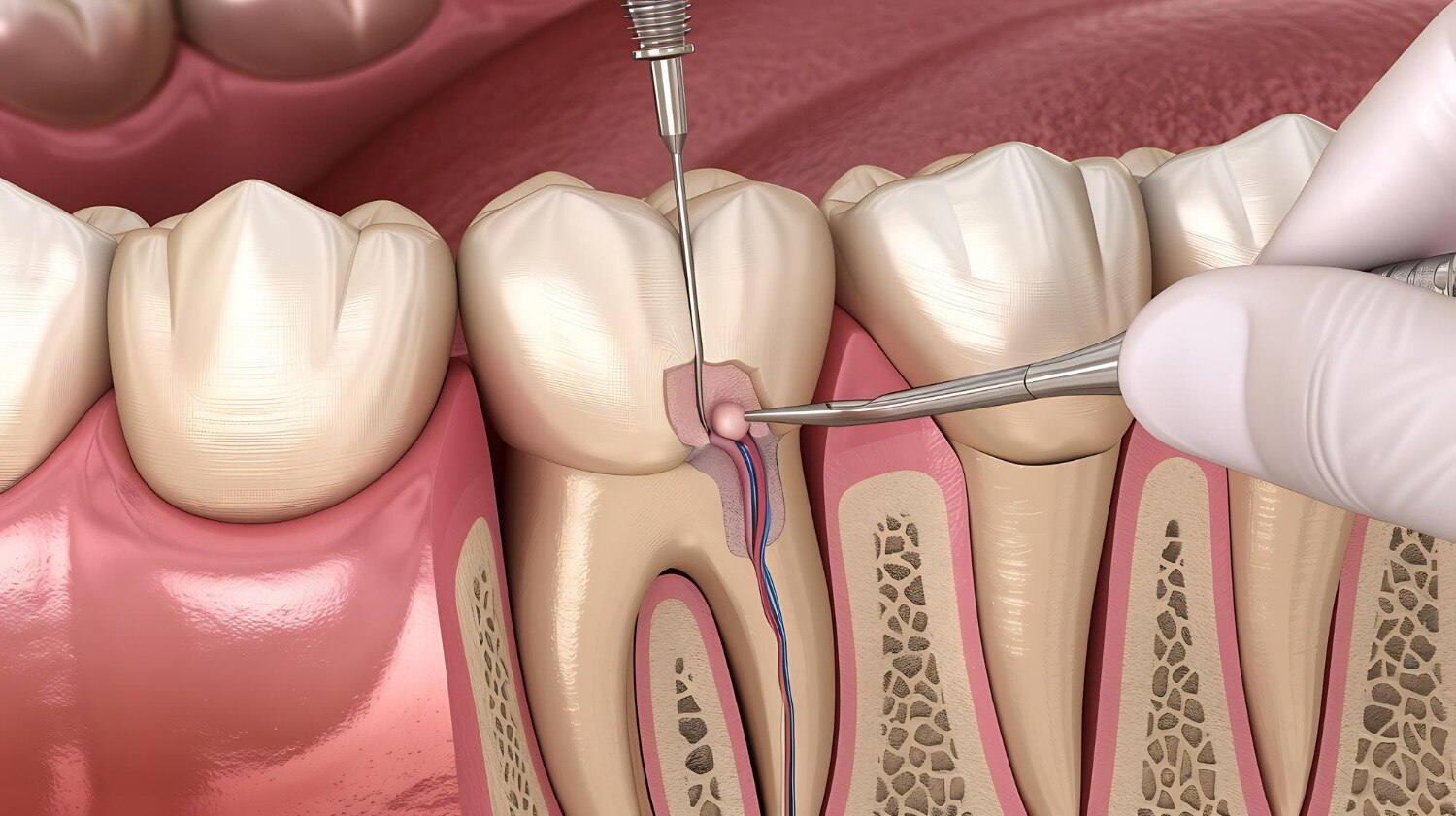
A root canal can save a tooth only when enough sound tooth structure and supporting bone remain. Ask the dentist to explain what happens during root canal treatment: the infected pulp is removed, canals are cleaned and shaped, then filled and sealed. The tooth still needs a definitive restoration.
The filling versus root canal decision depends on how deeply the damage reaches:
| Option | What it involves | When it fits |
|---|---|---|
| Filling | Removes decay and seals the cavity | The pulp remains healthy and symptoms stop promptly |
| Root canal | Removes infected pulp, cleans canals and restores the tooth | The pulp is irreversibly inflamed or infected, but the tooth is restorable |
| Tooth extraction | Removes the entire tooth | A crack, decay, missing structure or bone support makes survival unpredictable |
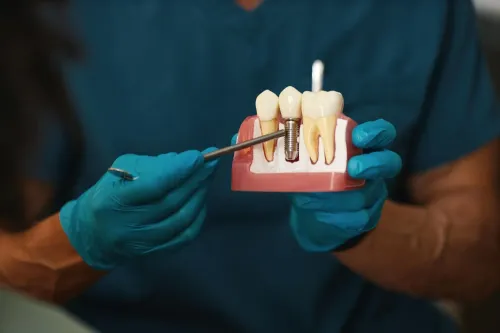
Extraction may be the safer choice with a vertical root fracture, extensive decay, inadequate remaining structure or severe supporting-bone loss. Replacement can involve a dental implant after extraction, a bridge or a removable partial denture. Back teeth frequently need a crown or another cuspal-coverage restoration because weakened walls can fracture.
Before agreeing, ask:
- Is the tooth restorable, and what finding supports that conclusion?
- What happens during each treatment, how many visits are expected, and what restoration follows?
- What is the alternative if the root canal fails?
- Do I need a crown, and how soon?
- Are antibiotics treating a spreading infection, or are they being offered instead of drainage or definitive treatment?
Repeated antibiotics alone do not remove infected pulp or rescue a non-restorable tooth.
What recovery and restoration involve after treatment
Soreness around the tooth for a few days is common after root canal treatment, especially when the area was infected or tender before treatment. Use pain relief as directed, and contact the dentist if pain is severe, worsening, or not settling.
Protect the tooth until its final restoration is placed. A temporary filling seals the opening but can wear or fall out, so avoid chewing hard or sticky foods on that side and brush and floss gently.
Arrange the definitive restoration promptly; a back tooth often needs a dental crown after root canal treatment because weakened walls can fracture under chewing pressure. The dentist will choose the material and timing based on the remaining tooth structure.
Children’s dental treatment may use a different restoration because the tooth and its expected lifespan affect the plan.
Good root canal aftercare does not make the tooth immune to decay, leakage, untreated canals, or fracture. Continue brushing twice daily with fluoride toothpaste, clean between teeth, attend routine examinations, and do not ignore a change in the tooth.
Contact the dentist again if:
- The temporary filling comes out, or the tooth feels high when you bite.
- Swelling, pus, a bad taste, or pain returns after improving.
- The tooth becomes loose, cracks, or cannot tolerate chewing.
- You develop facial or neck swelling, trouble swallowing or breathing, fever, or rapidly spreading swelling; seek emergency medical care immediately.
Antibiotics alone do not repair a leaking restoration or remove infected tissue. Persistent symptoms need examination and, if necessary, further dental treatment.
Frequently asked questions
What warning signs suggest an infected tooth needs attention?
Persistent toothache, pain when biting or chewing, lingering hot or cold sensitivity, tenderness when the tooth is tapped, swelling, or a tooth that feels high can indicate inflammation or infection around the root.
When does dental pain become an emergency?
Seek urgent dental care for facial or gum swelling, fever, worsening pain, pus or a bad taste, difficulty opening your mouth, or trouble swallowing or breathing. Breathing difficulty requires emergency medical care.
How does a dentist confirm the cause of tooth pain?
The dentist reviews your symptoms, examines the tooth and gums, tests sensitivity and response to tapping or biting, and uses dental X-rays to assess decay, the root and surrounding bone.
How do root canal treatment and extraction compare?
Root canal treatment removes infected tissue, cleans and seals the tooth, and preserves it. Extraction removes the tooth but creates a need to discuss replacement options such as an implant, bridge, or denture.
What does recovery and restoration involve after a root canal?
Mild tenderness can follow treatment. Avoid chewing hard foods on the treated tooth until the final restoration is placed, and return for a filling or crown when advised to protect the weakened tooth.