Bleeding gums, loose teeth or a deep periodontal pocket do not automatically mean you need surgery. You will be able to identify the measurements that matter, understand what treatment is tried first, and prepare specific questions before consenting to periodontal flap surgery.
Key takeaways
- Review six-site periodontal charting before deciding on surgery.
- Deep, persistent pockets after scaling and root planing support surgical consideration.
- Expect gum healing, plaque control and follow-up visits after flap surgery.
- Compare tooth prognosis, risks, alternatives and maintenance demands with your periodontist.
What findings show that gum disease is advanced enough for surgery to be considered?
Advanced periodontitis is established by a full periodontal examination, not bad breath, bleeding on probing, mobility, one deep reading, or a stage label alone. Periodontal charting records six sites around every tooth: periodontal pocket depth, bleeding on probing, clinical attachment loss, gum recession, tooth mobility, and furcation involvement.
Persistent inflammation and deep pockets indicate active disease; bad breath and mobility add concern about plaque retention and support loss, while rising risk of tooth loss demands a tooth-by-tooth prognosis. None means flap surgery automatically resolves the problem.
The 2017 classification describes a stage III pattern when interdental clinical attachment loss is at least 5 mm, radiographic bone loss reaches the middle third of the root or beyond, or complexity includes a vertical bone defect of at least 3 mm, class II or III furcation involvement, or a moderate ridge defect.
These findings can make flap access worth discussing, but the stage label does not decide treatment. X-rays reveal whether bone loss is horizontal or vertical, its extent, and its relationship to roots; they do not show bleeding or plaque activity.
Two teeth with similar images can have different prognoses because root anatomy, restorability, mobility, strategic value, furcation access, and plaque control differ.
| Finding | What the X-ray shows | Why the prognosis can differ |
|---|---|---|
| Horizontal bone loss | Broad, fairly even reduction along the root | Cleaning access and remaining support vary |
| Vertical bone loss | An angular defect beside the root | Defect shape, mobility, restorability, and plaque control determine treatment potential |
When does flap surgery become preferable to scaling and root planing?
Surgery becomes preferable when adequate non-surgical treatment leaves deep, inflamed residual periodontal pockets. The initial phase includes oral-hygiene instruction, smoking cessation and diabetes risk-factor control, professional subgingival instrumentation, scaling and root planing, plus removal or correction of plaque-retaining factors such as overhanging fillings or calculus.
Clinicians usually allow healing, then repeat periodontal charting after about 4 to 12 weeks, depending on the site and treatment plan.
The EFP thresholds guide discussion: residual pockets of at least 6 mm with inflammation support considering periodontal surgery, while persistent inflamed pockets of 4 to 5 mm may support access flap surgery. Depth alone is insufficient; the decision also considers:
- Bleeding on probing and clinical attachment loss
- Bone-loss pattern on X-rays
- Furcation involvement and tooth mobility
- Restorability and occlusion
- The patient’s ability to clean and attend maintenance
Treatment choice depends on the finding, not the word “advanced”:
| Option | What it addresses | When it applies |
|---|---|---|
| Flap surgery | Direct access for deep-root debridement | Persistent inflamed pockets after non-surgical care |
| Gingivectomy | Excess gum tissue without a deep bony defect | A suitable soft-tissue pocket |
| Gum grafting | Recession and exposed roots | Root coverage or tissue thickening |
| Bone grafting or guided tissue regeneration | Lost bone or attachment | A suitable, contained vertical defect |
| Laser-assisted treatment | Selected adjunctive instrumentation | Not an automatic substitute for established therapy |
Furcation procedures depend on class and anatomy; contained vertical defects may justify regenerative treatment rather than resective surgery.
What happens during flap surgery and the first weeks of recovery?
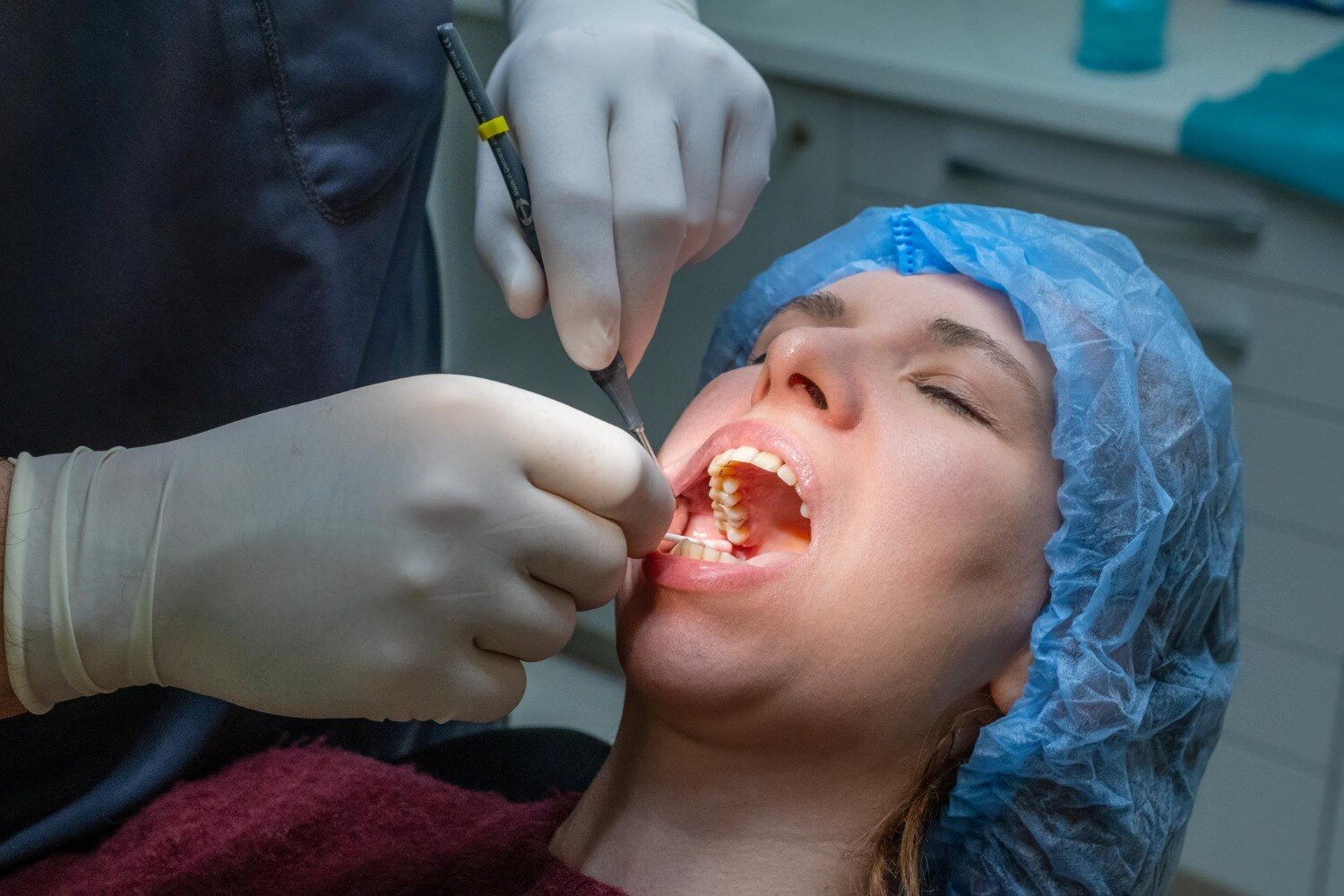
The periodontal flap procedure begins with local anaesthetic, followed by a precise gum incision around the selected teeth. The surgeon reflects the gum flap for direct access, removes granulation tissue and calculus, instruments the root surfaces, and inspects the bone defect.
Irregular bone may be reshaped; a suitable contained defect may receive bone grafting or guided tissue regeneration. The gum is repositioned, sutures are placed, and a periodontal dressing is applied when indicated.
For the first few days, choose soft or cool foods and do not chew on the treated area. Brush carefully around the site, use prescribed rinses or medicines when directed, and do not pull, brush over or otherwise disturb the sutures.
| Expected finding | What it means | What helps |
|---|---|---|
| Swelling or minor bleeding | Normal early healing; persistent heavy bleeding needs advice | Follow pressure and aftercare instructions |
| Soreness | Tenderness during the first days | Use prescribed or recommended pain relief |
| Tooth sensitivity | Temporary exposure of root surfaces during healing | Avoid extremes of temperature and follow sensitivity advice |
| Recession or longer-looking teeth | Inflamed gum tissue has shrunk as it heals | Discuss persistent sensitivity or cosmetic concerns |
Sutures and the periodontal dressing are checked or removed at a follow-up visit, often about 1 to 2 weeks after surgery. Periodontal reassessment follows after further healing. Antibiotics are not routine replacement treatment or an automatic part of surgery; they are prescribed only for selected indications.
What benefits, risks and long-term work should you expect?
The main periodontal flap surgery benefits come from direct access: the clinician can see and instrument deep root surfaces and bone defects that cannot be predictably cleaned through an intact pocket.
This access can reduce inflammation and pocket depth, but it does not restore lost attachment unless regenerative treatment is also indicated, and disease control may remain incomplete.
As inflamed gum shrinks during healing, expect possible:
- Gum recession and exposed roots
- Sensitivity and longer-looking teeth
- Open embrasures, or “black triangles”
- Esthetic concerns, especially around front teeth
- Persistent pockets, tooth mobility, further treatment or extraction
Planning and healing are affected by smoking, uncontrolled diabetes, poor plaque control, active infection, blood-thinning medicines and missed follow-up. Smoking and periodontal healing are closely linked: tobacco use reduces treatment response and long-term stability. Poor diabetes control can impair healing, while infection and heavy plaque increase inflammation and surgical risk.
Tell the clinician about tobacco use, recent diabetes readings and every medicine, including warfarin, apixaban, aspirin or clopidogrel. Do not stop a blood thinner without instructions from the prescribing doctor; changing it independently can cause serious harm.
Surgery is one phase of a continuing program, not a cure. Daily plaque control, individualized coaching, professional maintenance cleanings and repeated periodontal measurements remain necessary. Supportive periodontal care is commonly tailored to an interval of roughly 3 to 12 months according to recurrence risk.
How can you decide whether the proposed surgery fits your teeth and circumstances?
Consent is stronger when you can explain why each tooth needs surgery and what happens if you choose another route. Request a tooth-by-tooth periodontal diagnosis, not a recommendation based only on bleeding or a stage label.
- Pocket depth, bleeding on probing, clinical attachment loss, gum recession, mobility and furcation grade for every proposed tooth
- X-ray bone-loss pattern, including horizontal or vertical defects, plus each tooth’s prognosis
- Number of sites, anaesthesia plan, estimated appointments and healing timetable
- Scaling and root planing completion date and the planned reassessment date
- Periodontal surgery alternatives, total treatment scope and the maintenance schedule
Flap surgery may be the wrong first choice when the disease is mild, a deep pocket comes from a defective crown or filling, or the tooth prognosis is unfavourable. Correction of the restoration, monitoring or extraction may fit better; inability to maintain daily plaque control or attend follow-up also changes the plan.
| Finding | More suitable direction | Why |
|---|---|---|
| Mild disease | Cleaning and monitoring | Surgery adds avoidable treatment |
| Defective crown or filling | Correct the restoration | The local cause remains otherwise |
| Poor tooth prognosis | Extraction or replacement planning | Surgery may not save a non-restorable tooth |
| Contained vertical defect | Regenerative treatment assessment | Defect shape affects the procedure |
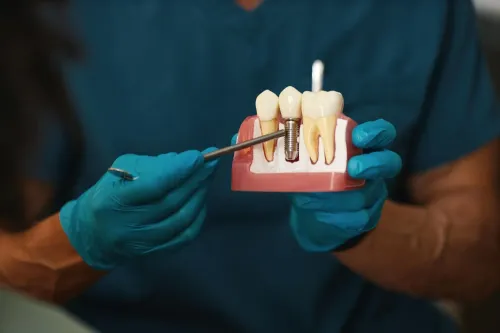
Include restorative planning and implant planning: untreated periodontitis, mobility and bone loss can prevent a tooth from supporting future crowns, bridges or implants. At Orchards Dental Care 9886020830, use this checklist to request measured findings before consenting to surgery.
Related service
Periodontal Flap Surgery Advanced Periodontal Flap Surgery at Orchards Dental Care At Orchards Dental Care, Sadashiva Nagar, Bangalore, we offer advanced Periodontal Flap... View service → |
Frequently asked questions
What findings show that gum disease is advanced enough for flap surgery to be considered?
A full periodontal examination reviews six sites around every tooth, including pocket depth, bleeding on probing, clinical attachment loss, recession, mobility and furcation involvement. The overall pattern, response to initial treatment and tooth prognosis matter more than one deep reading or a stage label alone.
When does flap surgery become preferable to scaling and root planing?
Flap surgery is considered when thorough scaling and root planing, plaque-control changes and reassessment leave deep, difficult-to-clean pockets or infected root surfaces. The decision depends on whether surgery can improve access and preserve a tooth’s long-term function.
What happens during periodontal flap surgery and the first weeks of recovery?
The periodontist numbs the area, lifts the gum tissue to access the root surfaces, removes deposits and diseased tissue, reshapes the site when needed, and replaces the gum with sutures. Recovery involves following cleaning instructions, managing discomfort, attending suture or review appointments, and protecting the treated area while it heals.
What benefits, risks and long-term work should you expect after flap surgery?
Potential benefits include better access for removing disease-causing deposits, reduced pocket depth and improved maintenance. Risks include bleeding, infection, sensitivity, gum recession and incomplete healing. Long-term success requires daily plaque control, professional maintenance and periodontal monitoring.
How can you decide whether proposed periodontal surgery fits your teeth and circumstances?
Ask for your complete periodontal chart, the pocket depths and attachment loss at each site, the expected prognosis for each tooth, alternatives, recovery demands, risks, costs and maintenance schedule. Use these details with your periodontist to compare surgery with continued nonsurgical care or other treatment.